Day 14, Saturday 22 August: Ferry and Aberdeen day
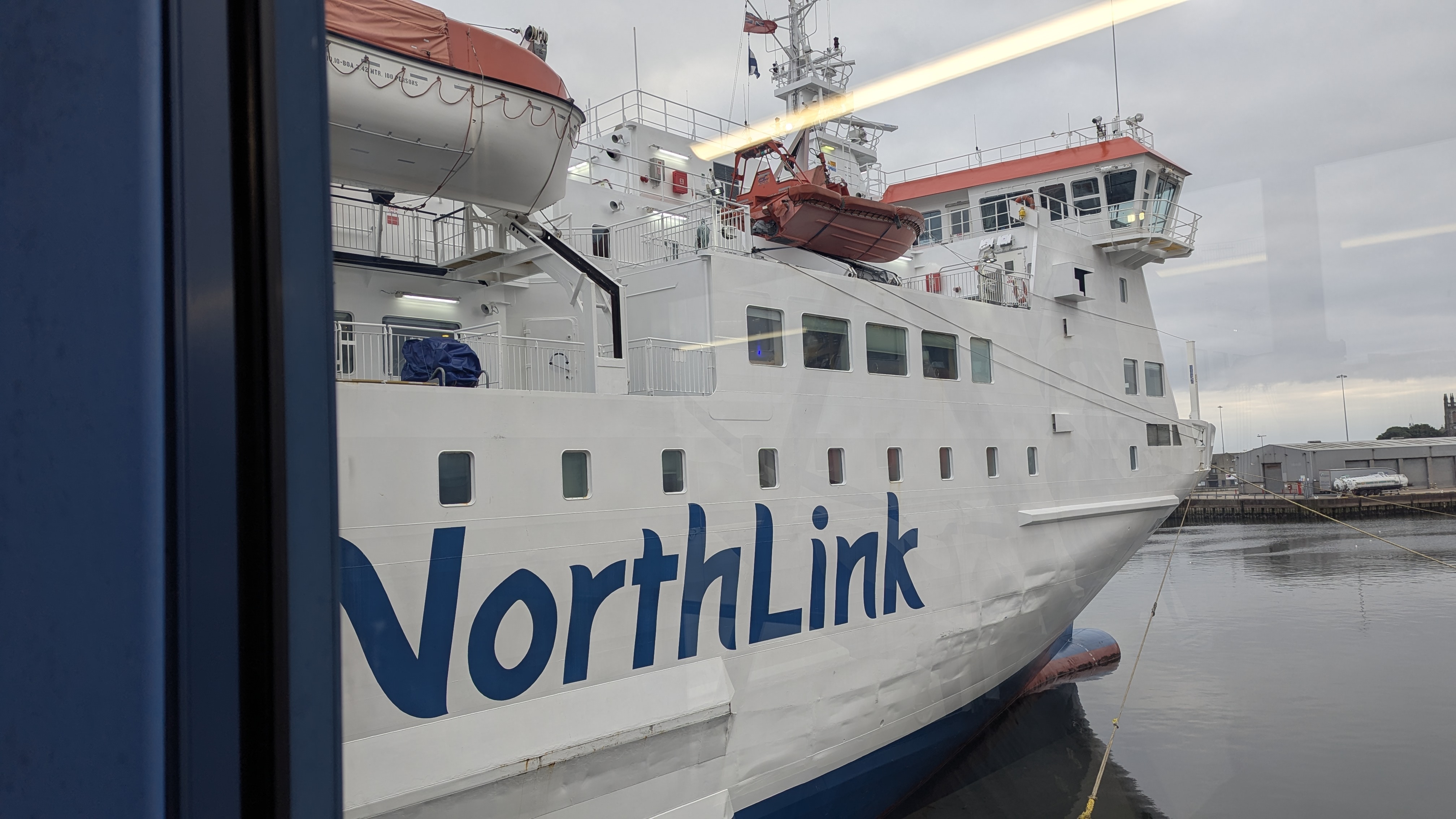
You find us onboard the overnight ferry from Orkney to Aberdeen and in our windowless cabin; absenting sensory information (such as daylight), we reached consensus that the day had started at 6:30, giving us time to have breakfast aboard the ferry before we disembarked. The brilliant news was that the kids had slept soundly through the night, and no-one had been ill, despite a distinctly rocky crossing.
The absence of a window in the cabin meant we had no idea where we were on our voyage. Our first glimpse of the world outside was when we came down the stairs to breakfast, to find that we were already past the breakwater wall in Aberdeen Harbour. Allowing time for breakfast, we eventually disembarked around 7:30am into centre of Aberdeen.
- Good news: our expected hotel room was actually a nice apartment with a big sitting room and two bedrooms.
- Bad news: it wouldn’t be ready for about six hours yet.
- More bad news: no hotel lounge / toilets / showers (this is what I’d really been looking forward to).
- Reasonable news: at least we could drop our bags behind reception desks.
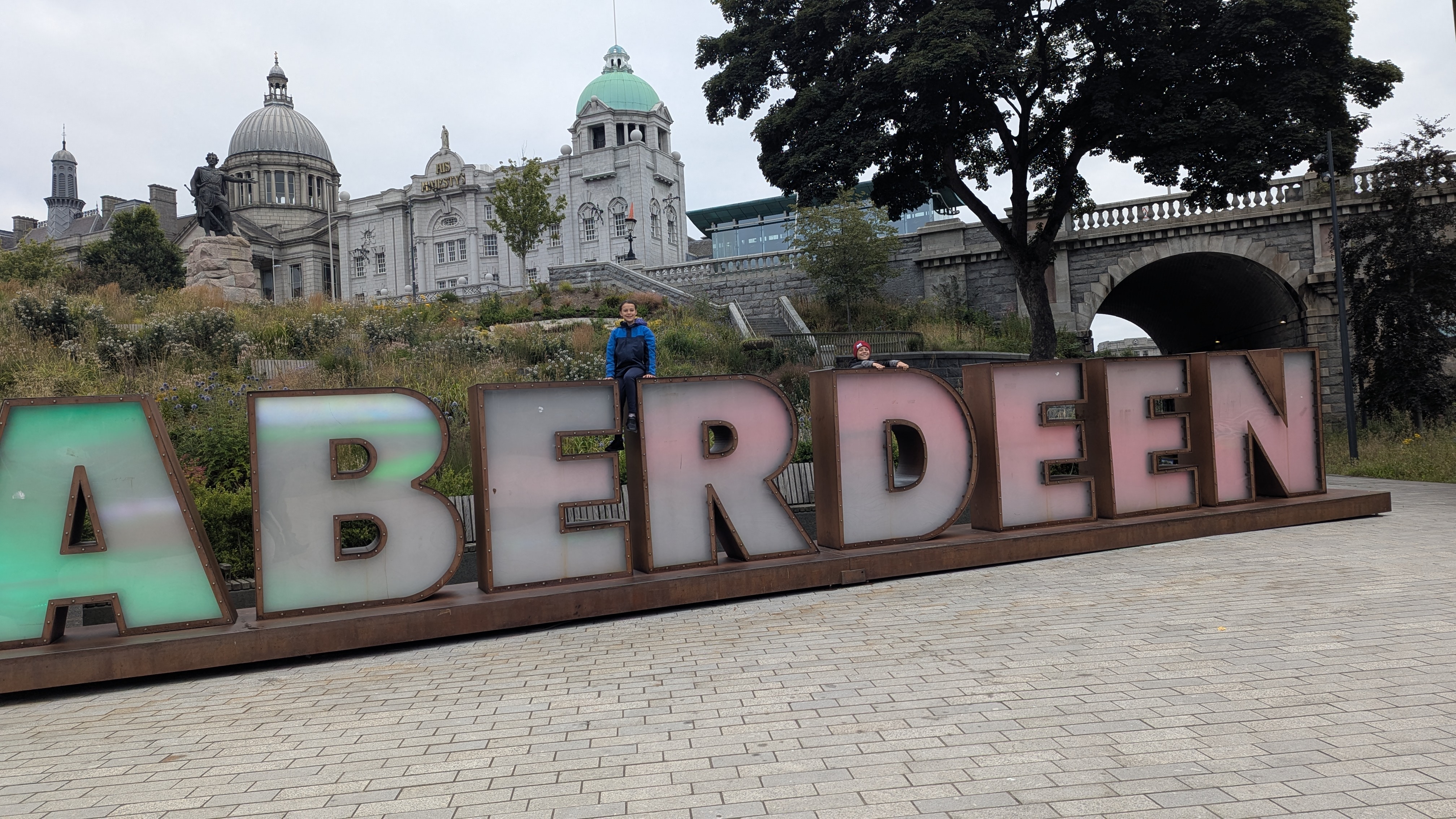
More Bad news: there is absolutely nothing to do in the centre of Aberdeen at 7:30am on a Saturday. Not a sausage (or even a sausage roll, for that matter). We did a dutiful foot tour and tried to appreciate the planting in the terrace gardens and the sporadically impressive granite architecture eg at the Marischal’s College. But eventually we gave up and fell into a soulless corporate coffee shop on the grounds that it had an interior and wasn’t a vape shop, waiting for something of interest to open.
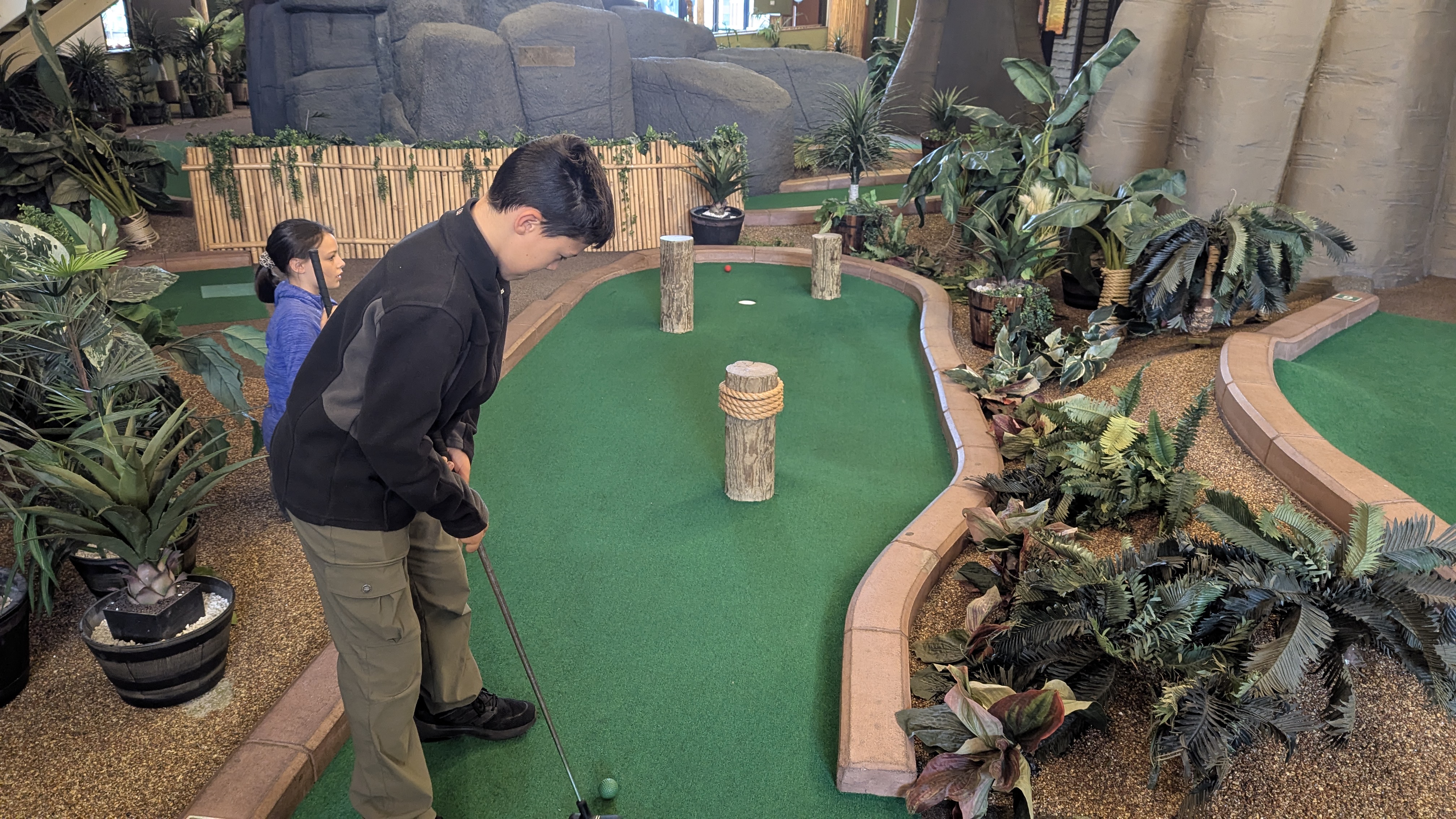
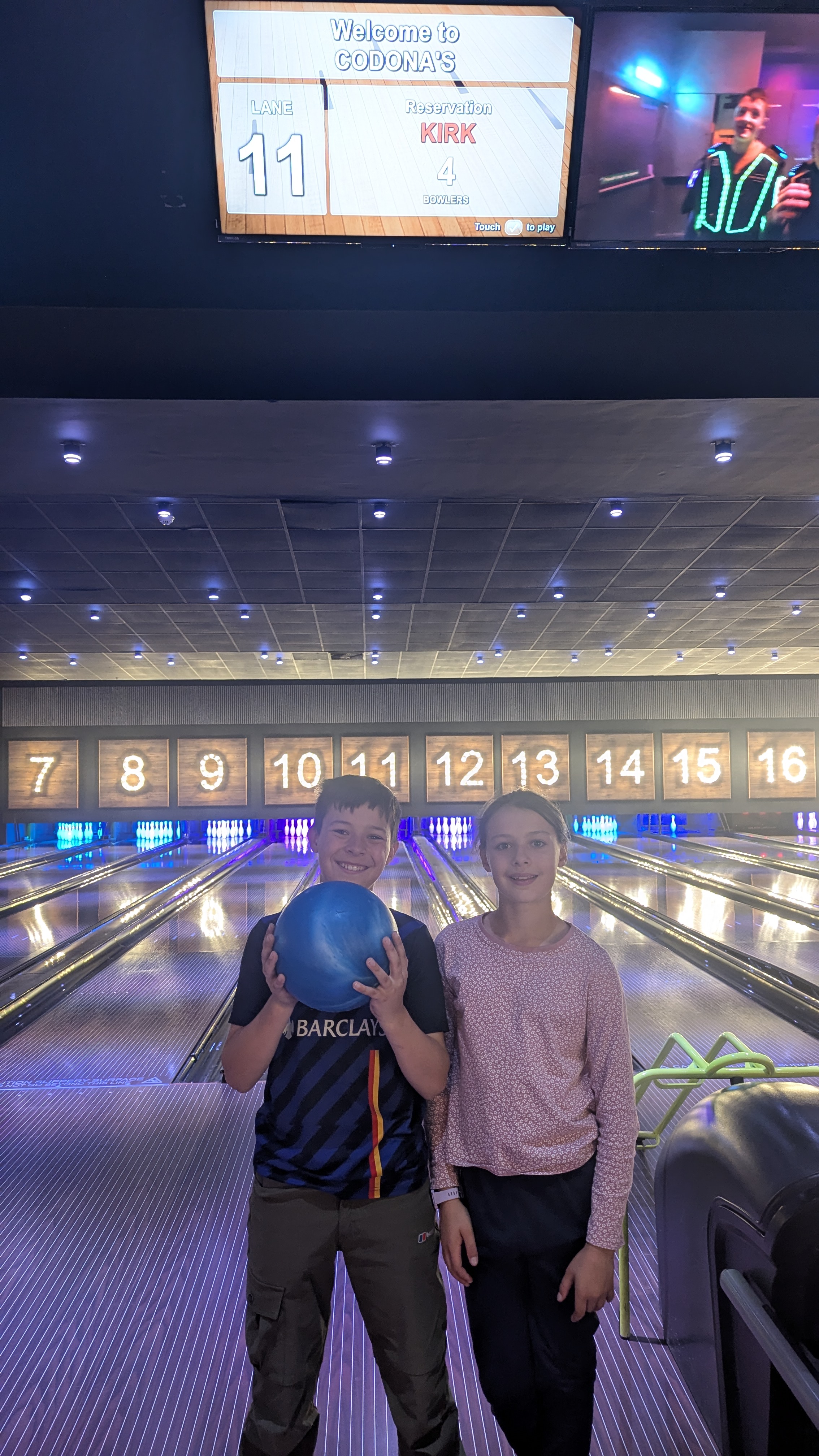
By 10am we’d found our way to what Aberdeenies (I assume that’s what they call themselves, corrections welcome) call ‘The Beach’; this is a massive child’s entertainment complex incorporating everything from ferris wheels to go karts to indoor and outdoor crazy golf to AR darts, pool etc etc etc. Basically a Dom and Rosa paradise. We all enjoyed the (indoor) crazy golf, and the kids enjoyed the collossal indoor play installation (pirate themed), followed by another game of ten-pin bowling, in which Dominic comprehensively got his revenge on Al from the previous day. A windy walk along the actual Aberdeen beach yielded a shack serving mexican lunch, and then a bus stop took us back to central Aberdeen.
We promised ourselves we’d go and find some of the cool and quaint corners of Aberdeen (eg. Footdee pronounced ‘Fitty’, and the area around King’s College Chapel - no, not that King’s College Chapel - have good reputations) but our apartment was so comfortable that we all wanted a shower and a lounge around for the afternoon. Good job: we discovered we’d got the tide times all wrong for the crossing across to Lindisfarne the following day, and that there would be nowhere in Berwick which would take our luggage for three days. Some emergency admin time required! Fortunately Berwick’s excellent Premier Taxis came to the rescue and reorganised their schedule and even agreed to take our luggage for the whole time we were on Lindisfarne. Deus ex Taxicab!
- Link to Lindisfarne crossing advice: https://holy-island.uk/how-to-walk-the-pilgrims-way-to-holy-island-minding-tide-times/
The kids lay in their comfy big bed beneath crisp white linen and watched Matilda the Musical in their pyjamas having had lovely warm showers. Nobody wanted to go anywhere. We popped to Tesco express and provisioned up for the evening and for the walk across tomorrow. We rounded off with Wagamama’s takeaway (mmmm Ramen!!) and a lovely comfy bed for the night.

Day 15, Sunday, 23 August: To Lindisfarne
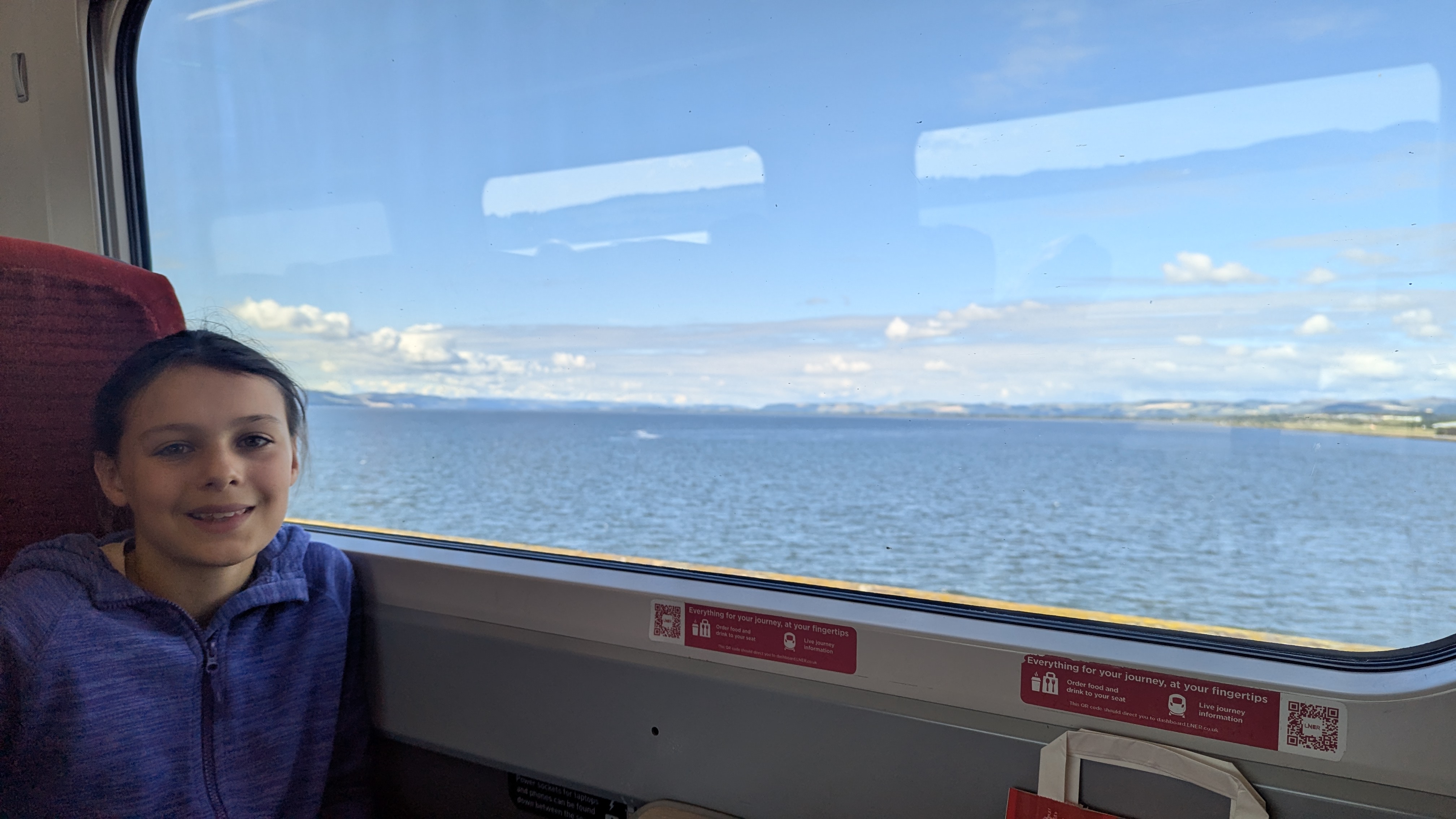
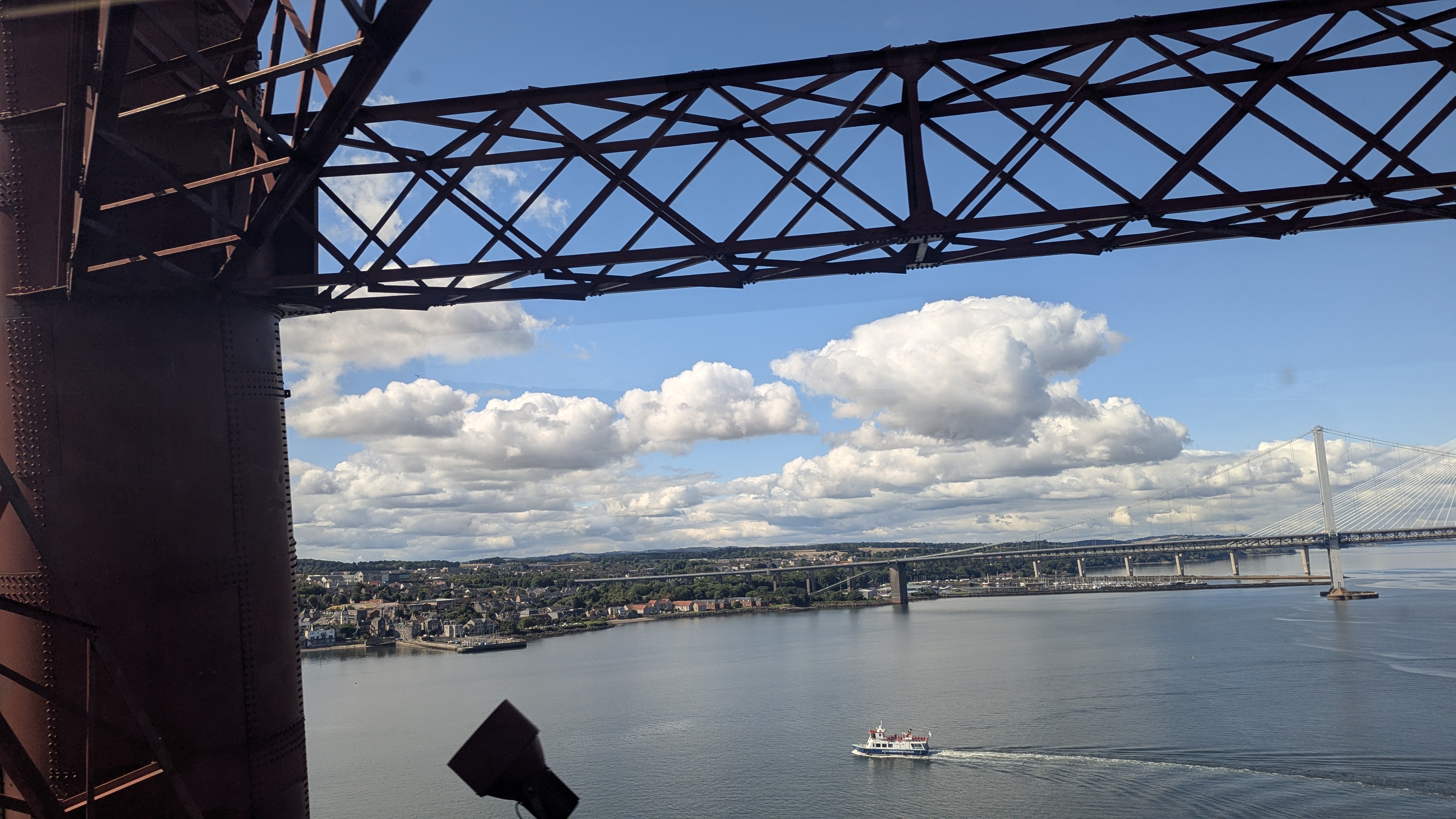
The day started with a surgical-precision re-pack, to make sure we had enough stuff for the final two nights but not too much to carry across the pilgrim’s way to Lindisfarne. Then a short walk to Aberdeen Station to catch the train back across the Scottish border to Berwick. This is a comfortable and sea-side scenic journey, crossing both the Firth of Tay and the Firth of Forth on the famous Forth Bridge. The weather was fine and clear and we had glorious views of Arthur’s Seat and Inchcolm, before climbing on to the Forth Bridge.
In fact the weather seemed to be getting better all the time as we headed south …
In no time at all we were pulling into Edinburgh Waverley under the glowering presence of the castle bringing back memories of the Edinburgh trip we’d made back at Christmas. In fact we were last here on the overnight of the Caledonian Sleeper at ?4am. It’s not a long run from Edinburgh to Berwick; the border flashes by in in an instant and then you pull into the small but smart station after enjoying more coastal views.





The ancient tidal pigrim causeway across to Holy Island
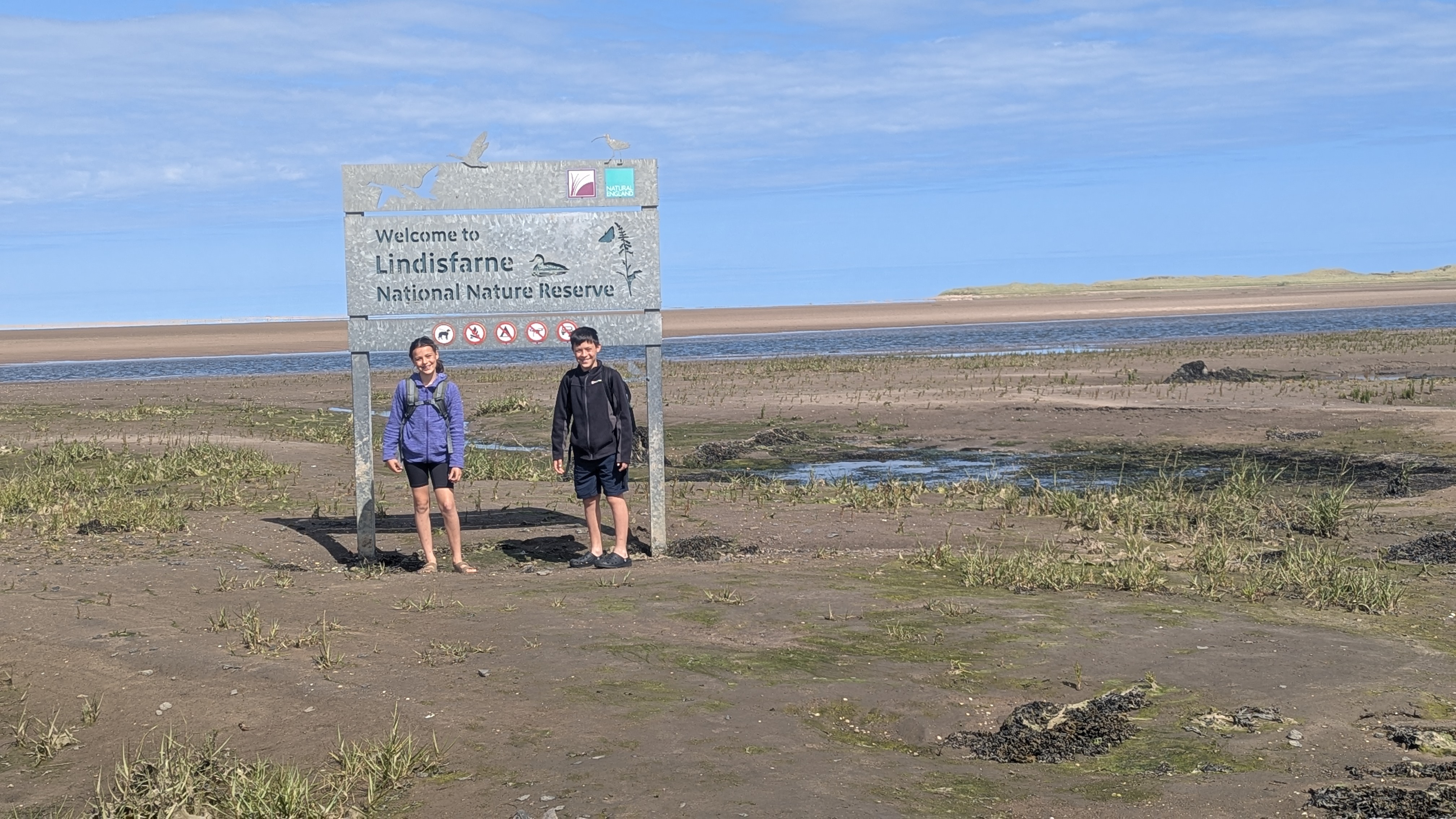
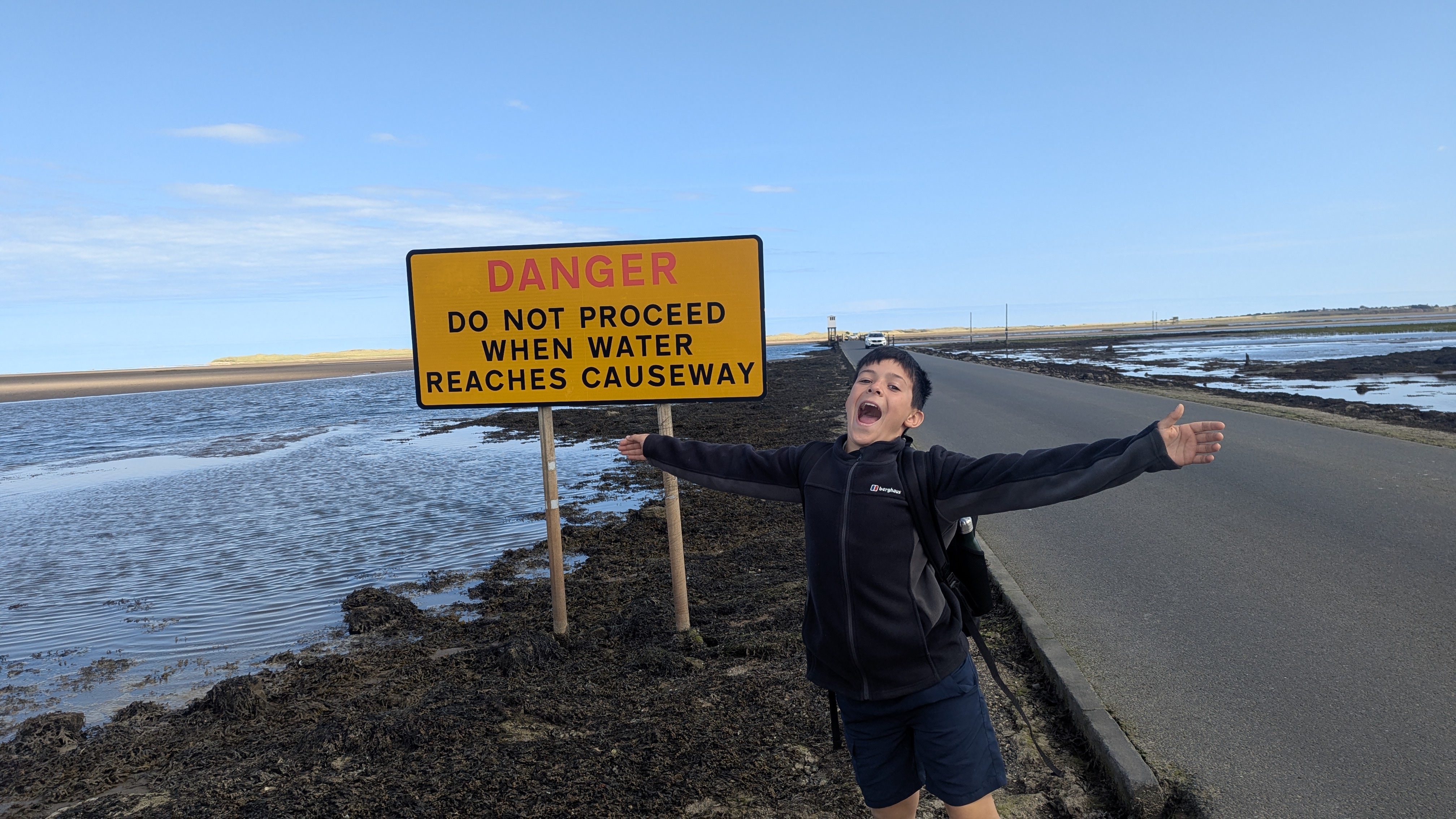
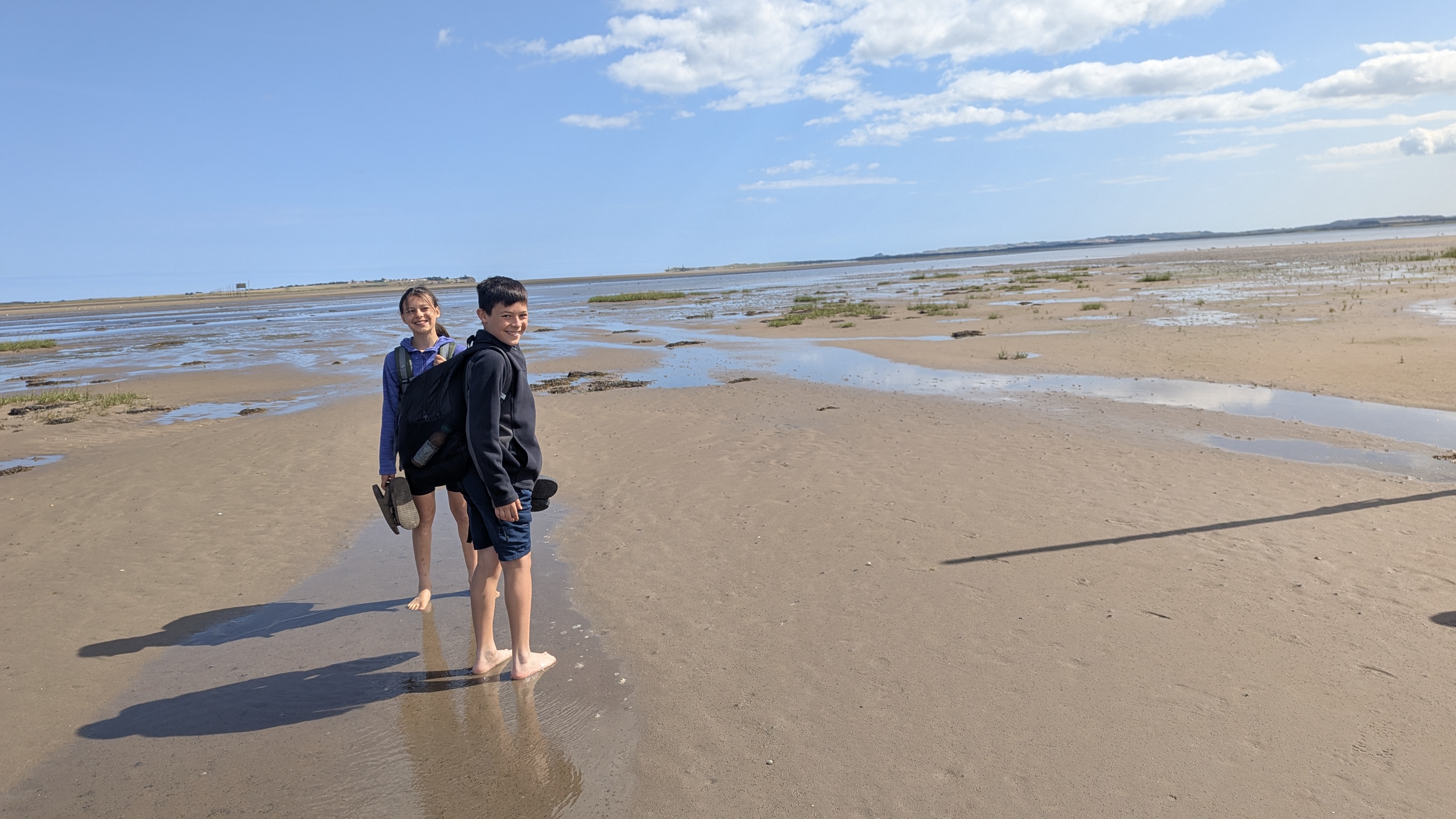
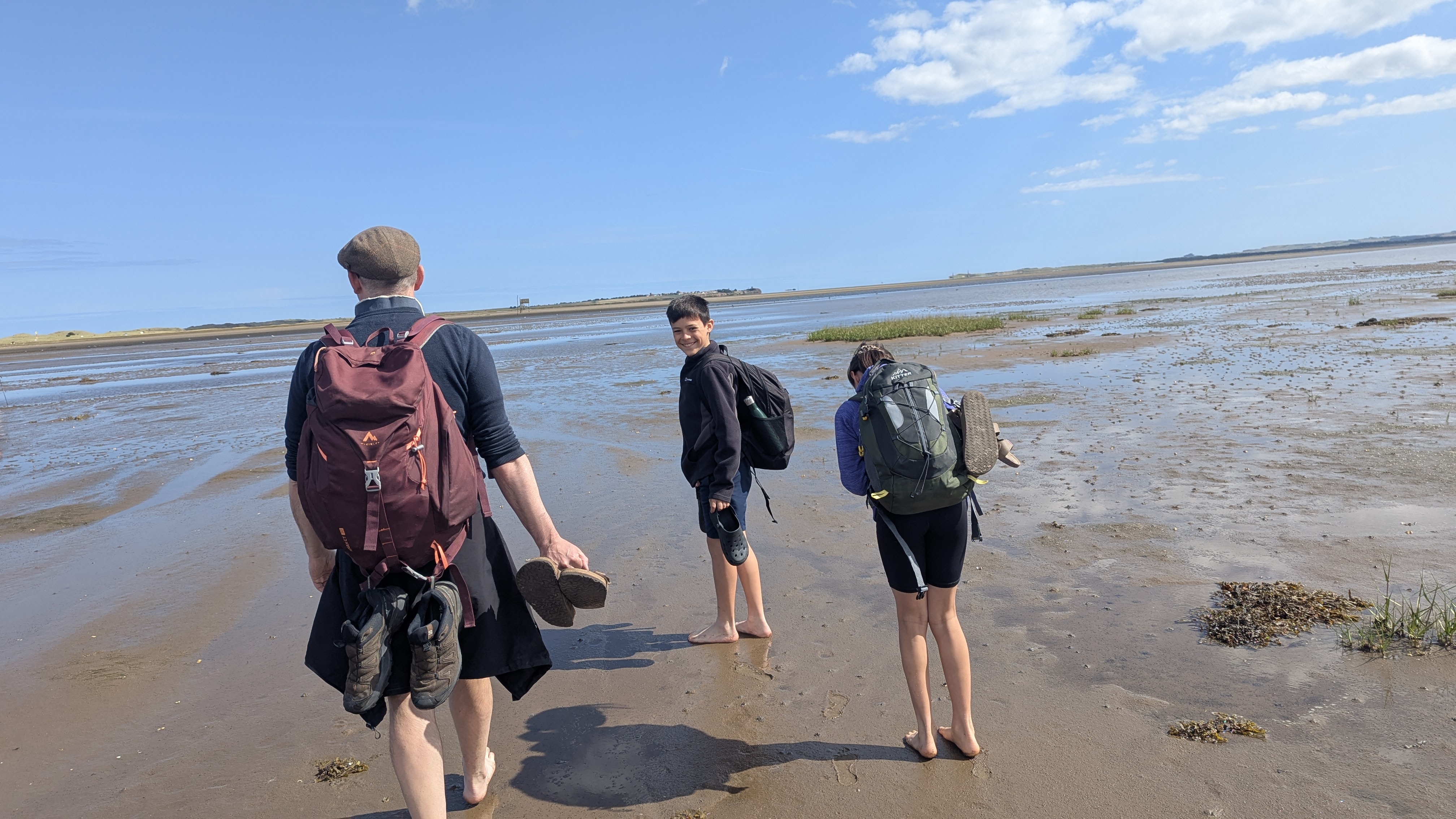
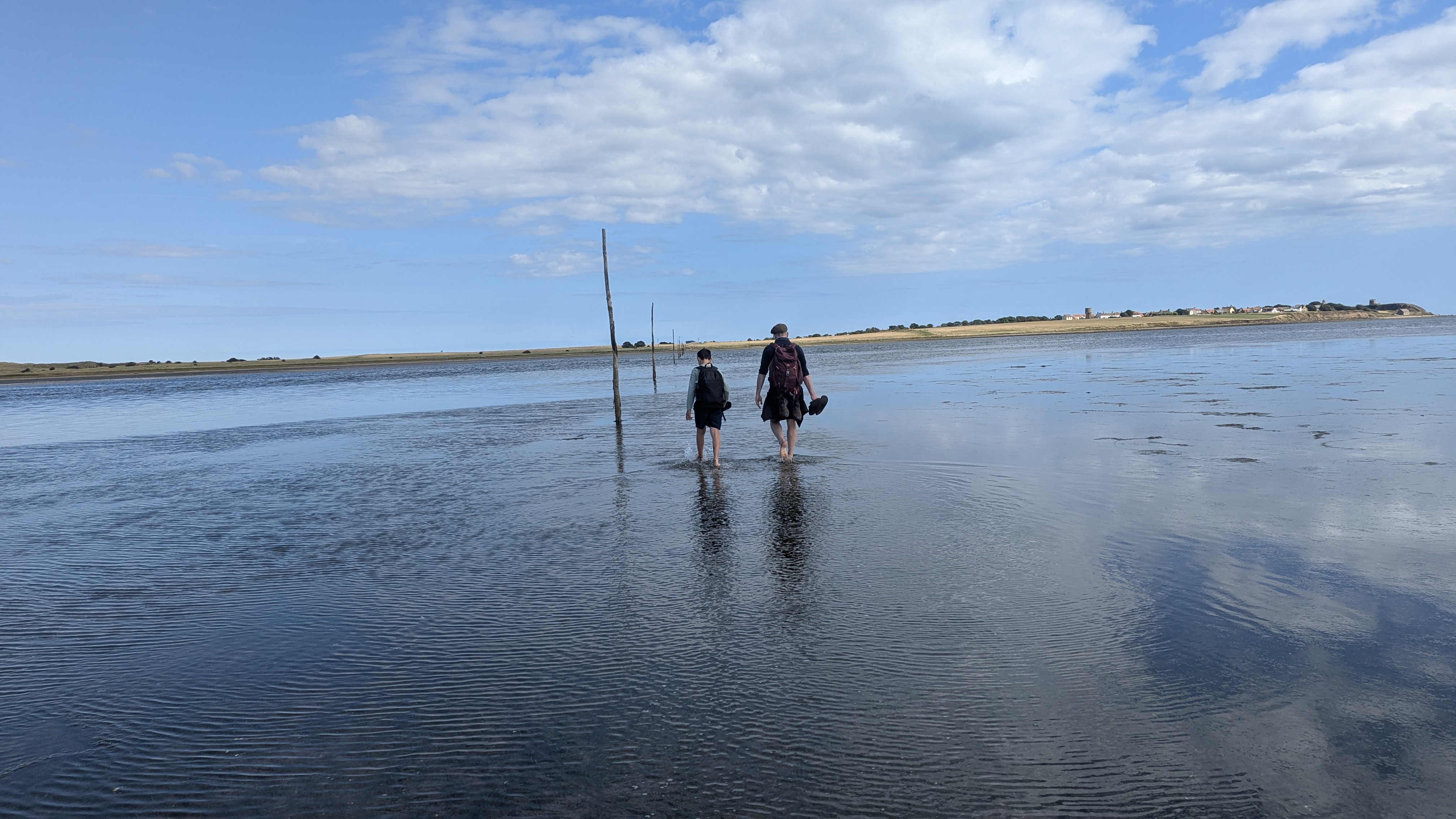
He dropped us off right at the beginning of the causeway and we began the sensational walk across to Holy Island. You may know that there are two causeways across the tidal sand and mud flats across to the island: the modern (1950s) tarmac road and the much older pilgrim route, picked out slightly spookily in 20ft high poles. The modern road climbs up onto the sand dunes as soon as it can, whereas the old pilgrim route heads in a ruler-straight line for the village at the far end of the island. We planned to follow the ancient route.
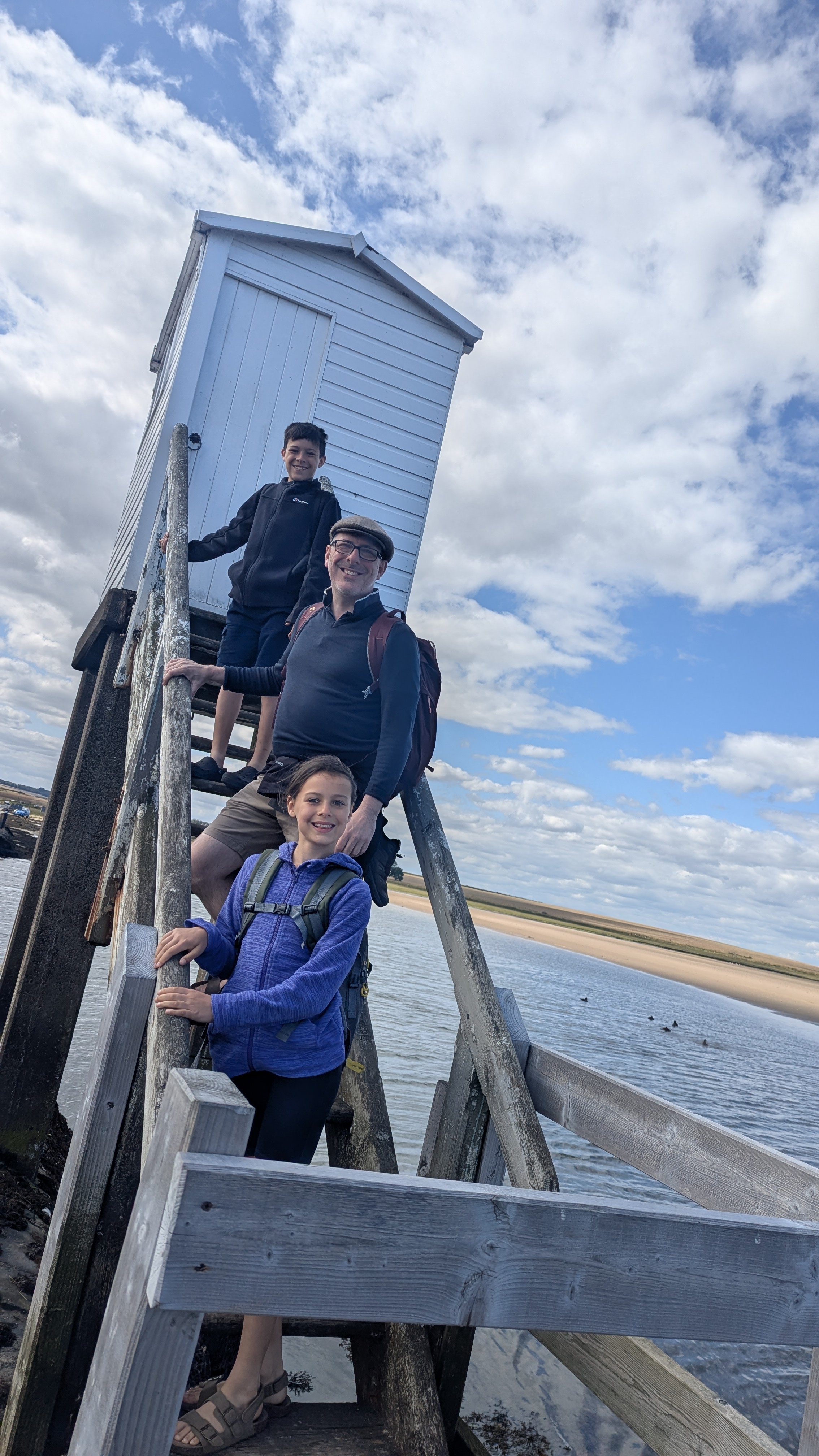
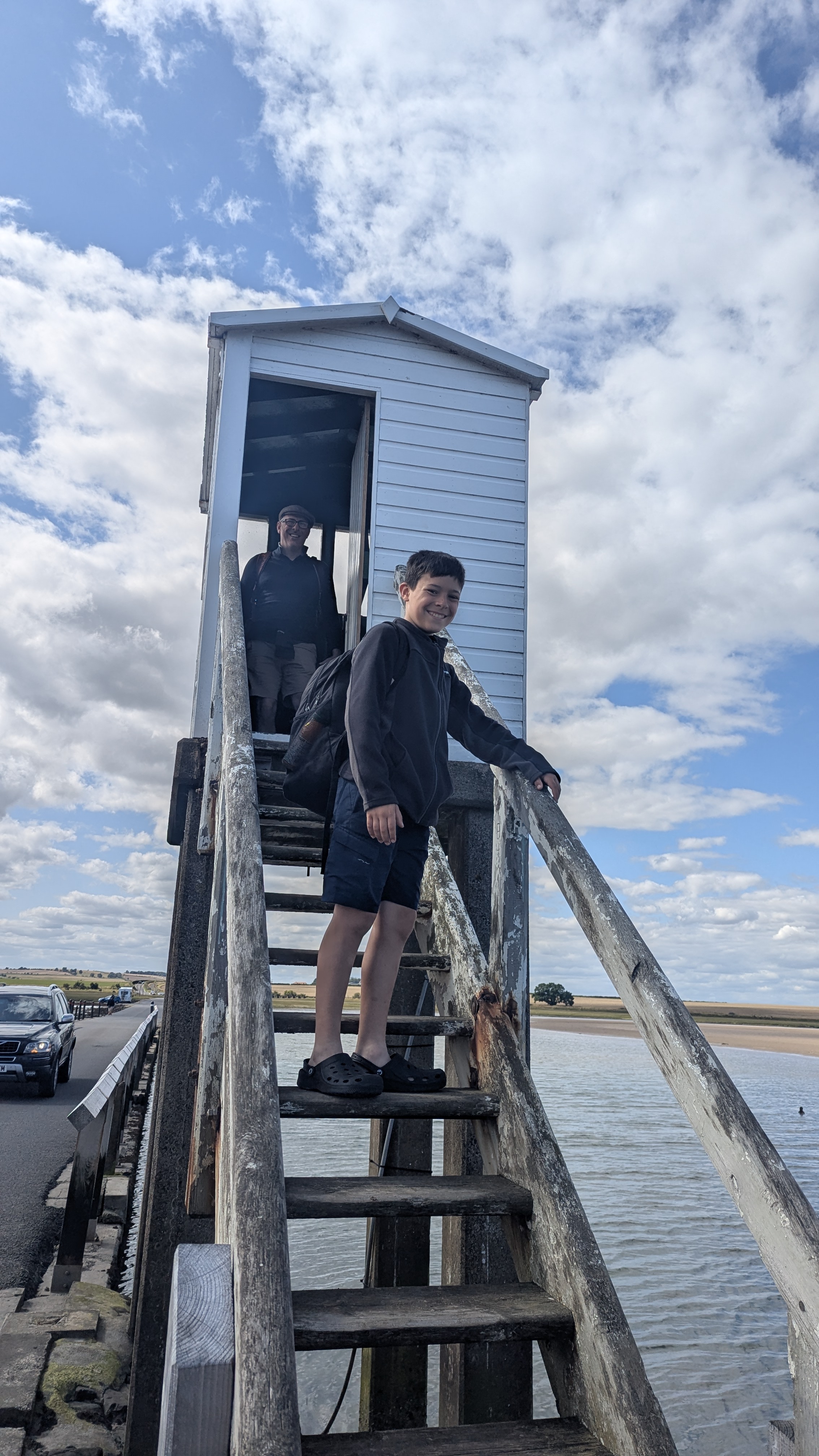
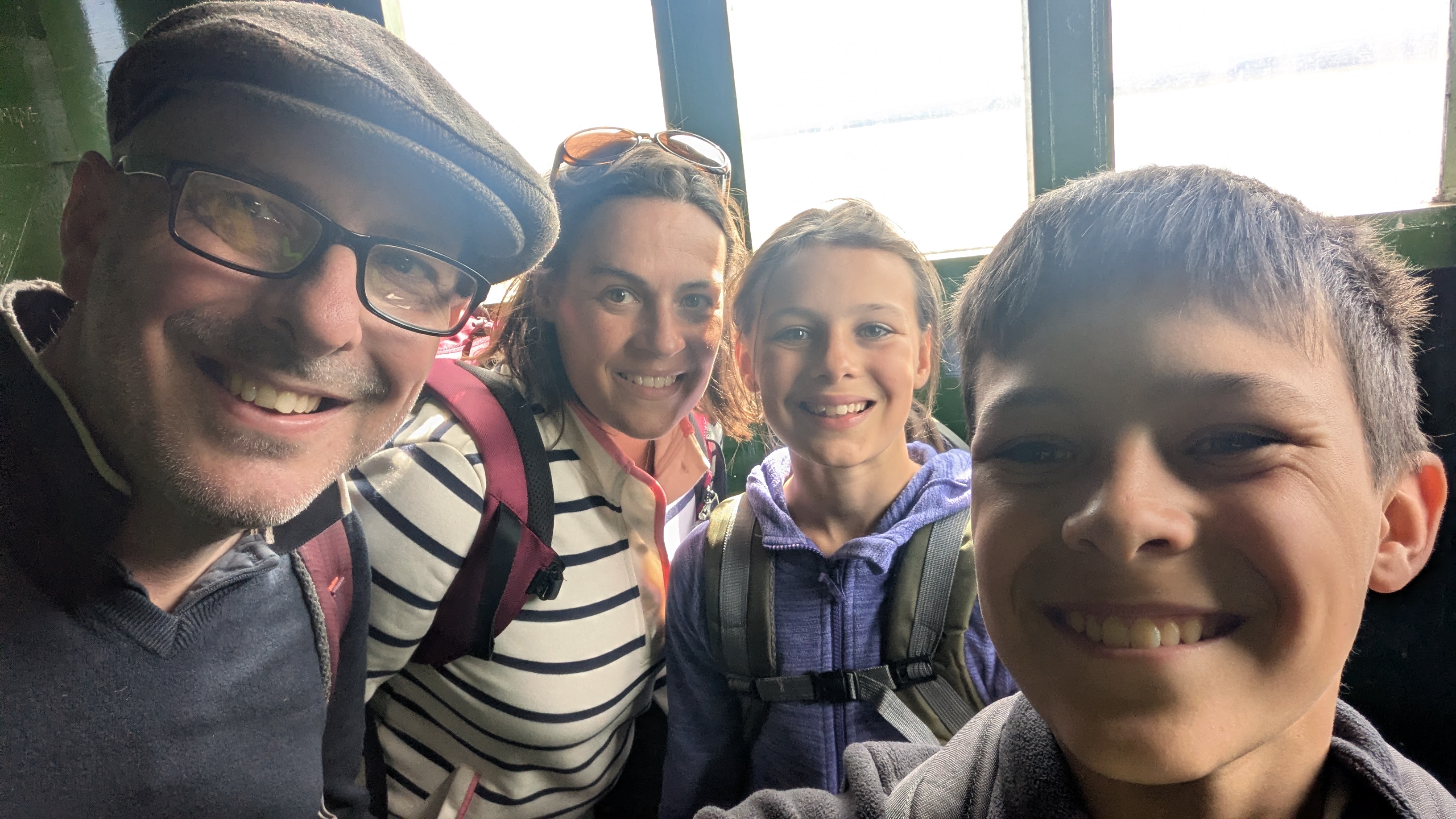
You start on the modern road (to get across a river which crosses the bay) and then set off diagonally on the pilgrim route once the modern road has passed the ‘refuge’ (a shed on long stilts for people who get caught short by the tide, locally known as the Idiot Box). Being the first time we’d been here on foot we had to take advantage of the opportunity to explore the idiot box. It is surprisingly green inside and has a few bottles of water, a first aid kit and a phone with a single button to summon the RNLI coast guard.
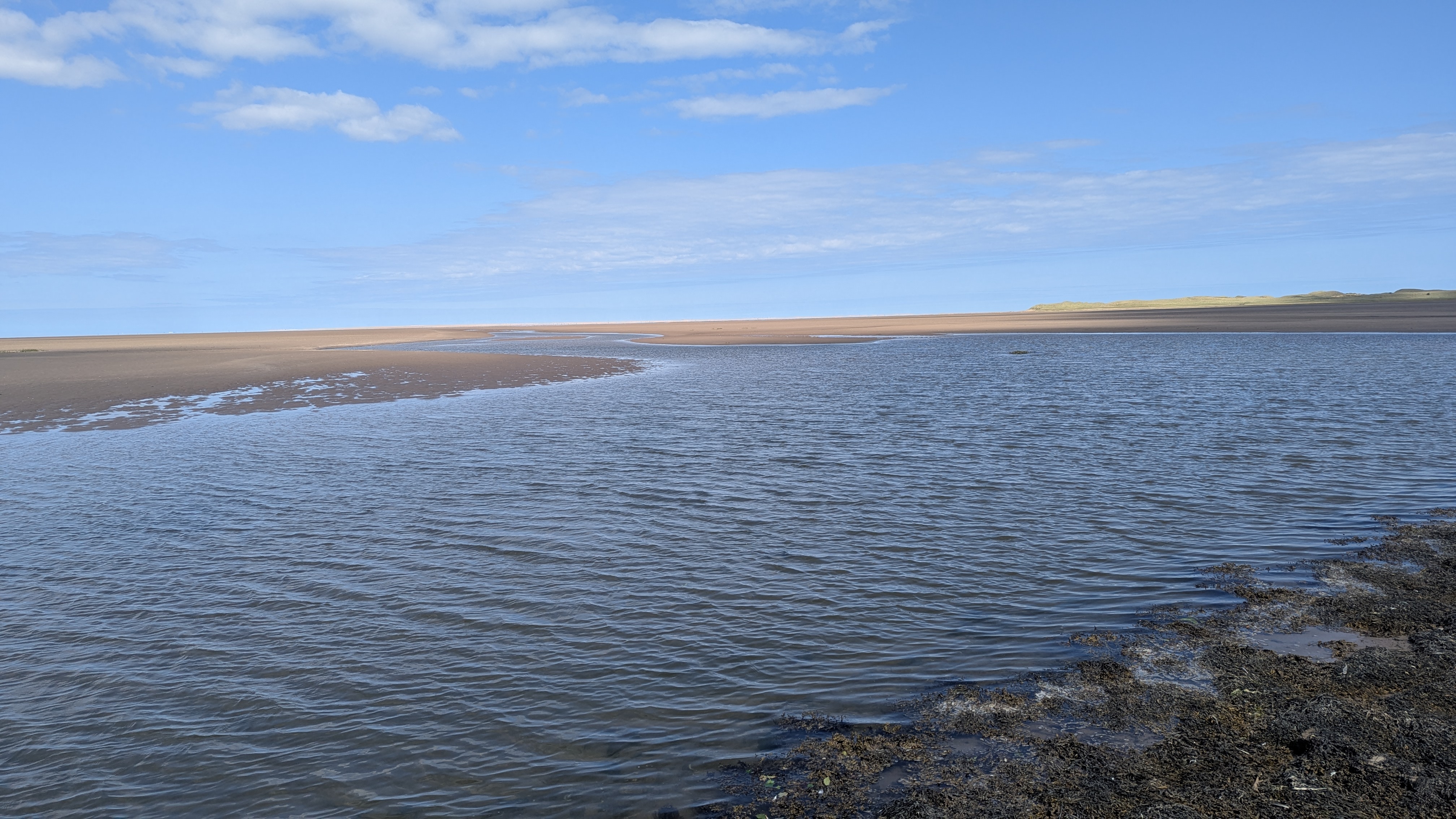
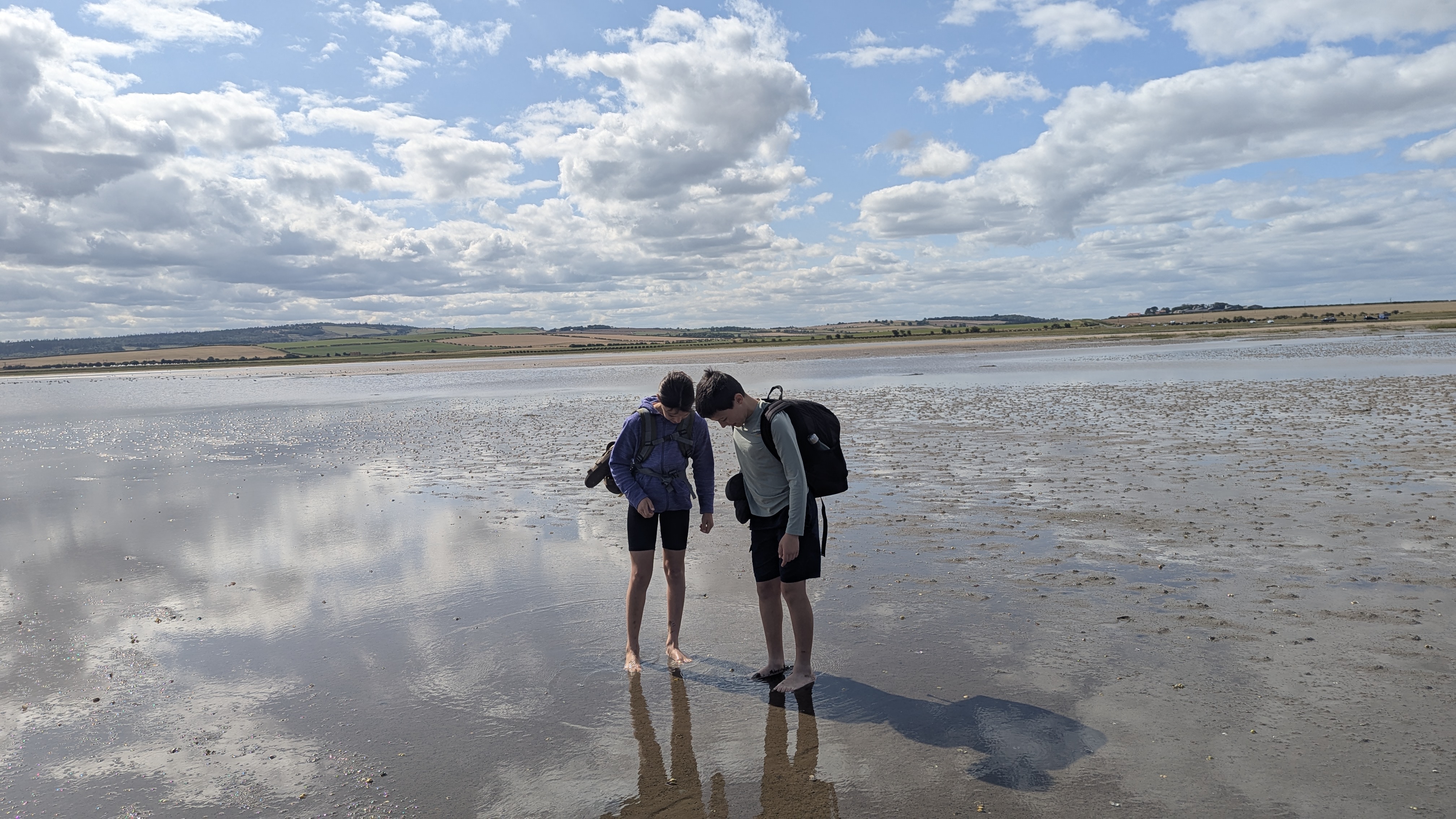
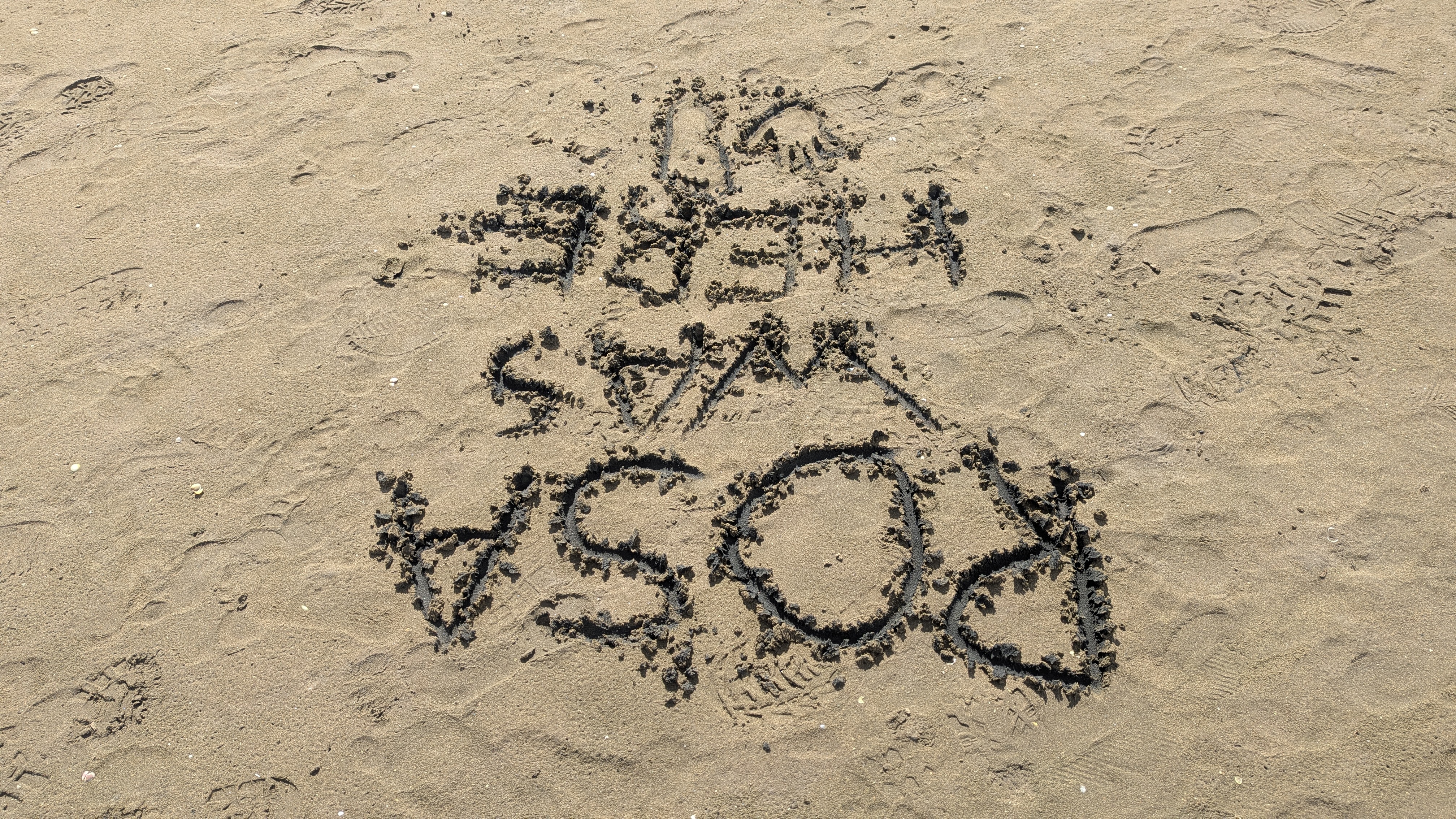
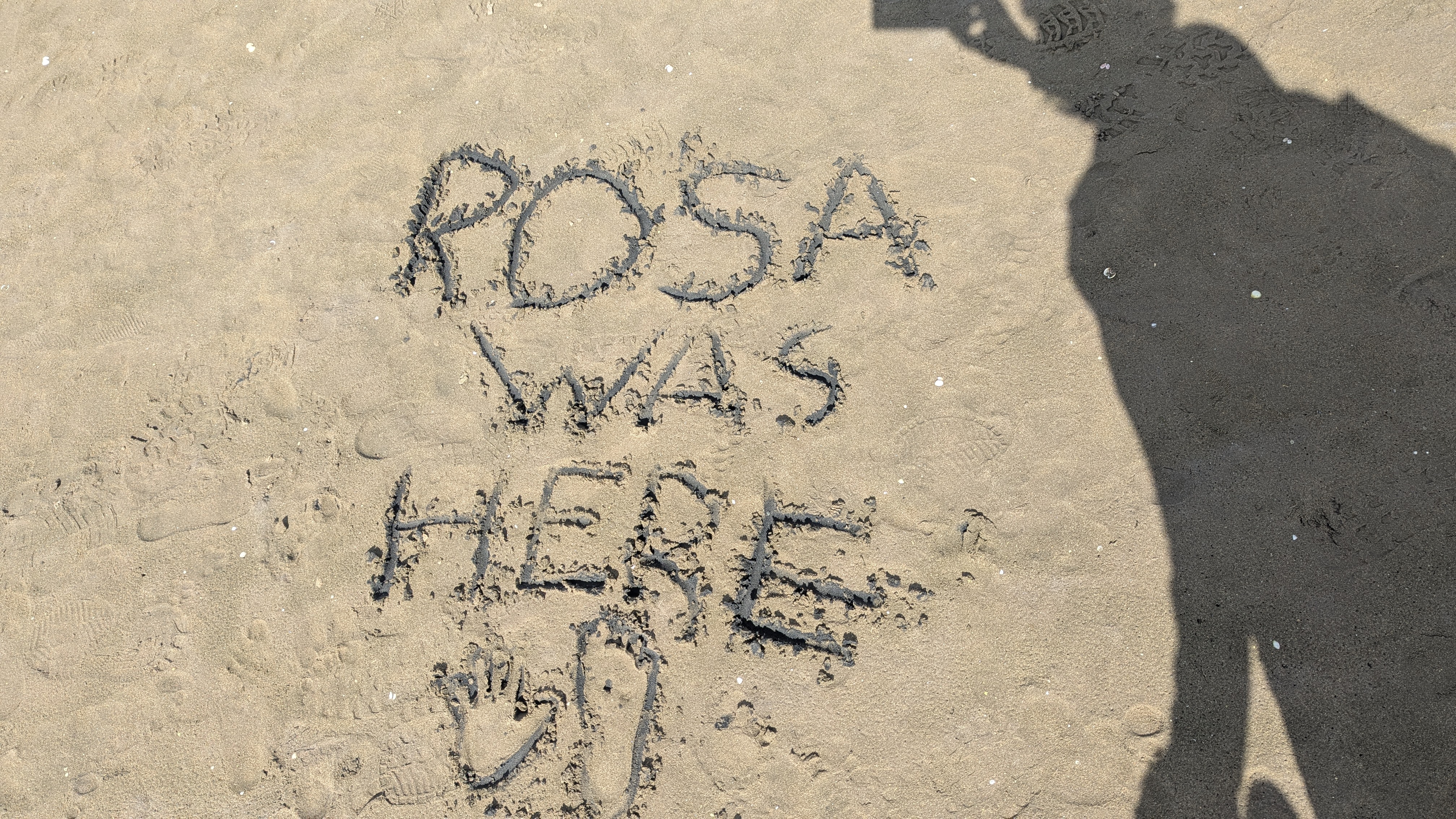
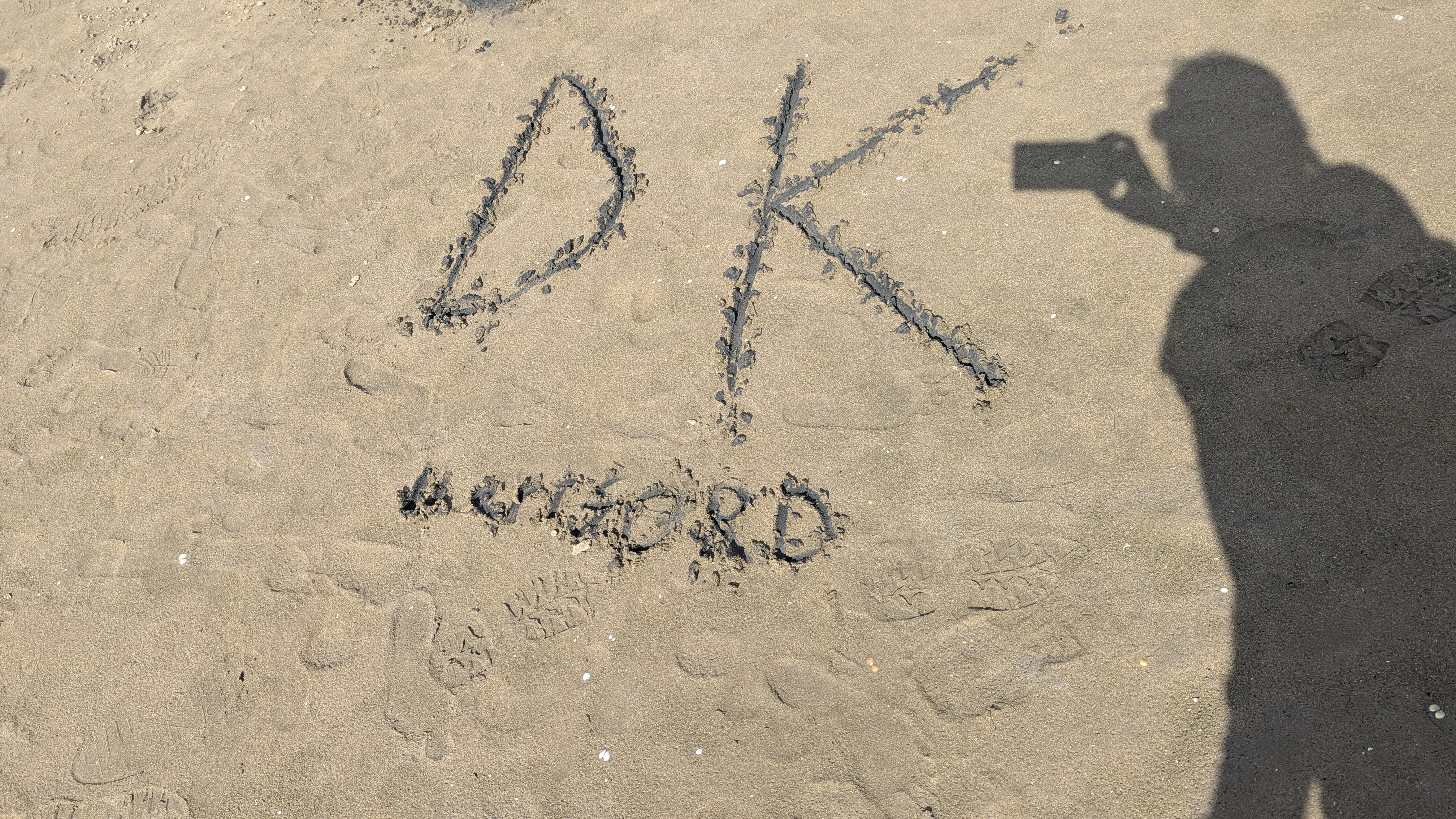
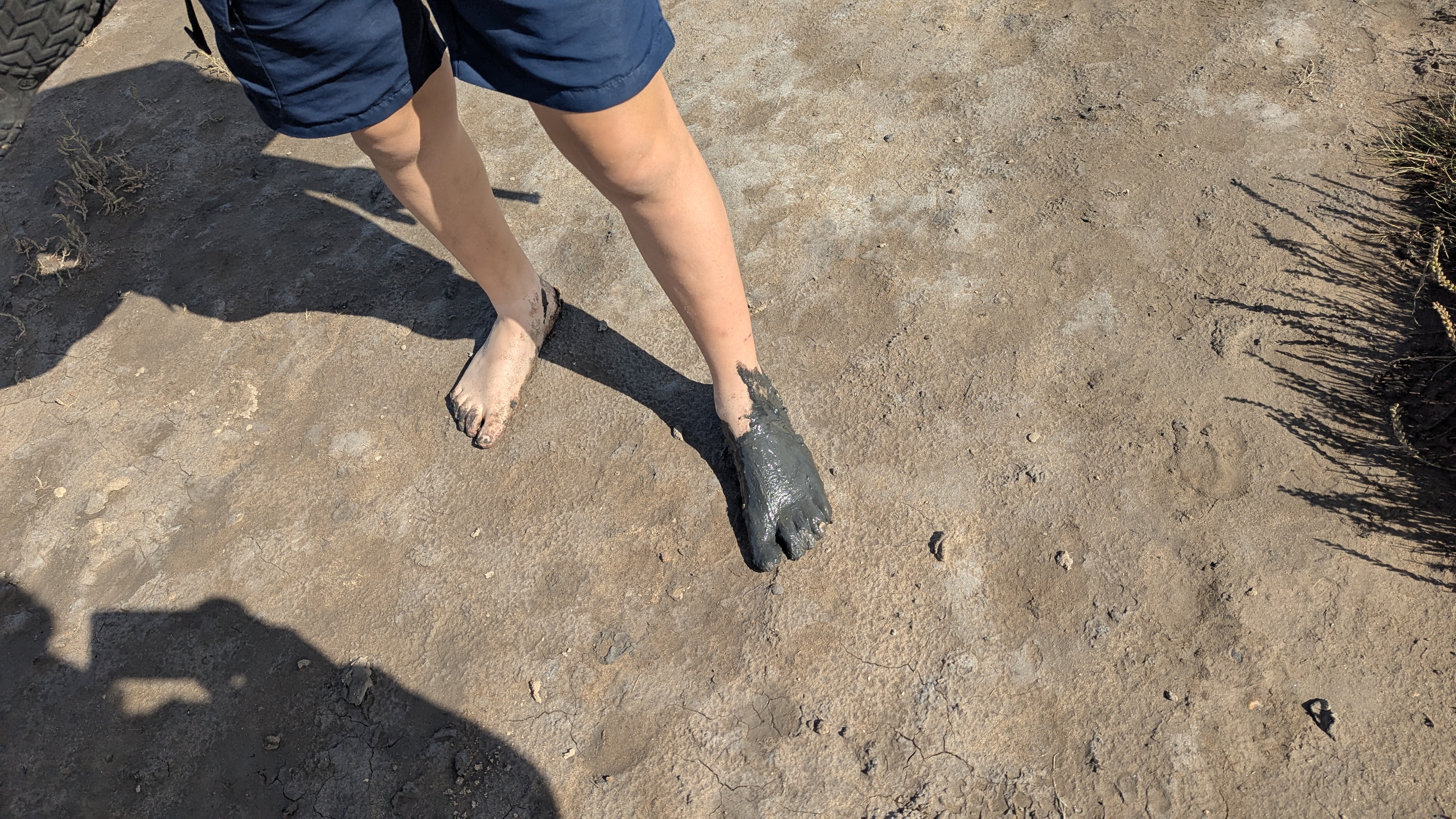
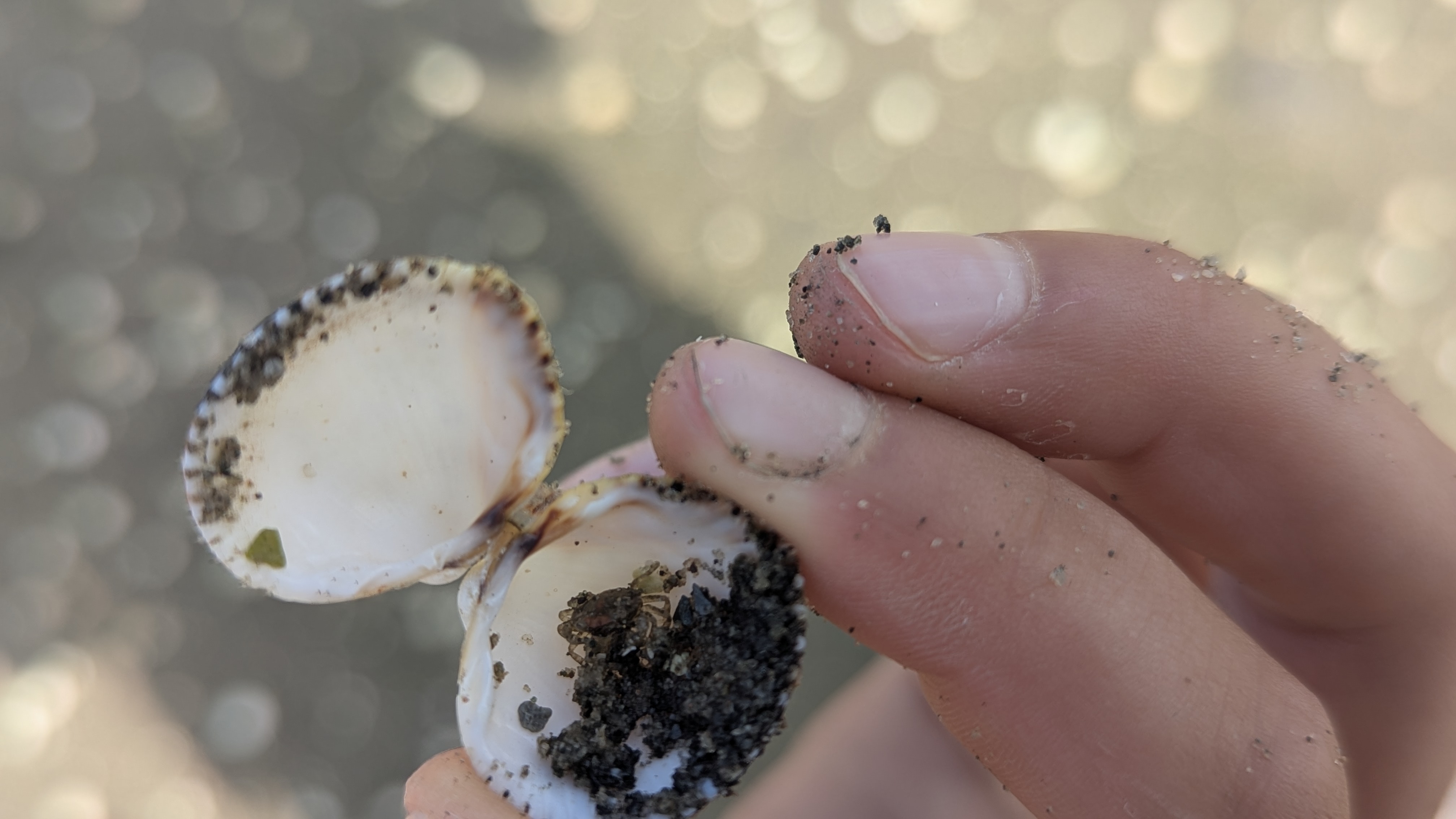
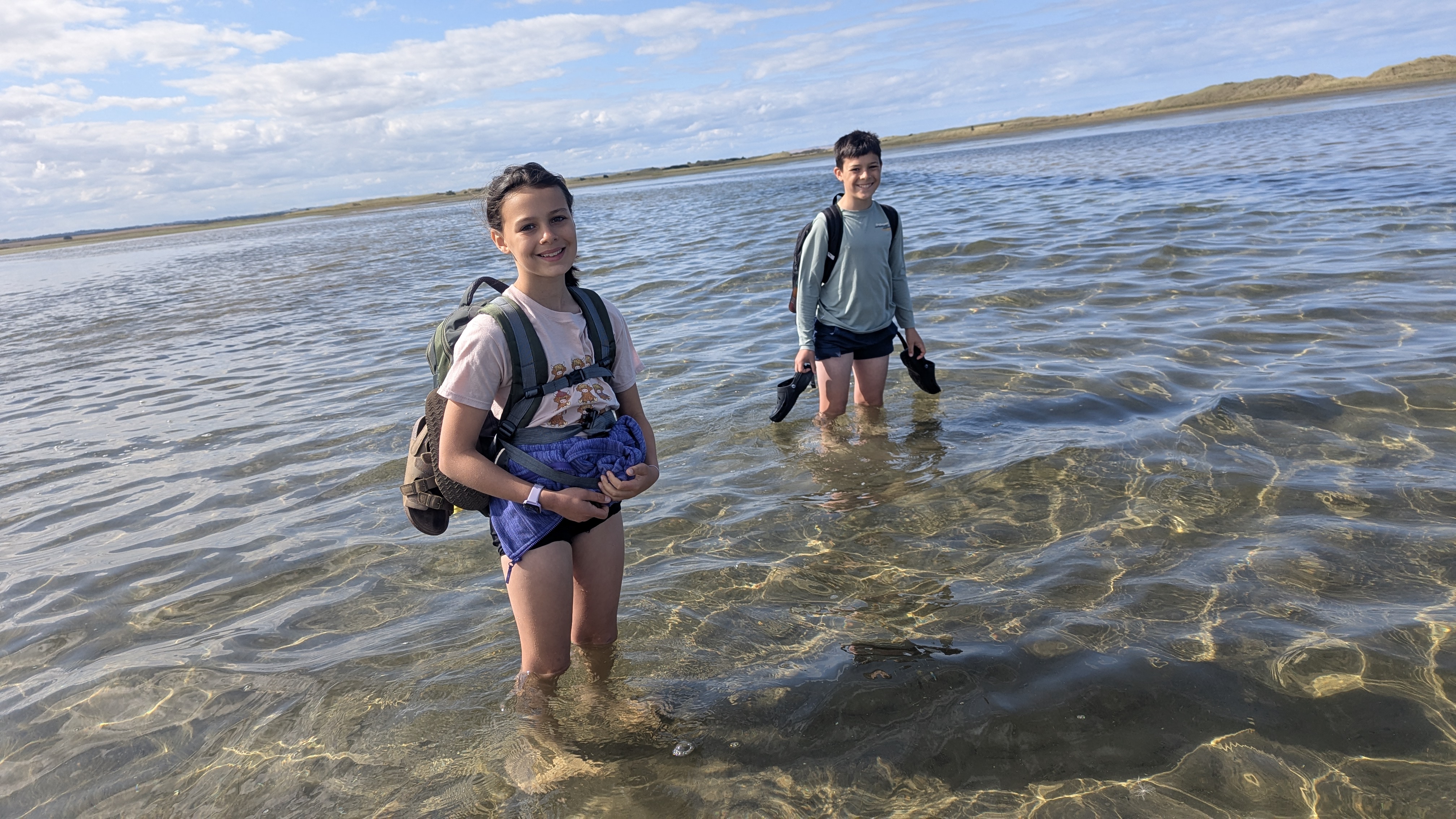
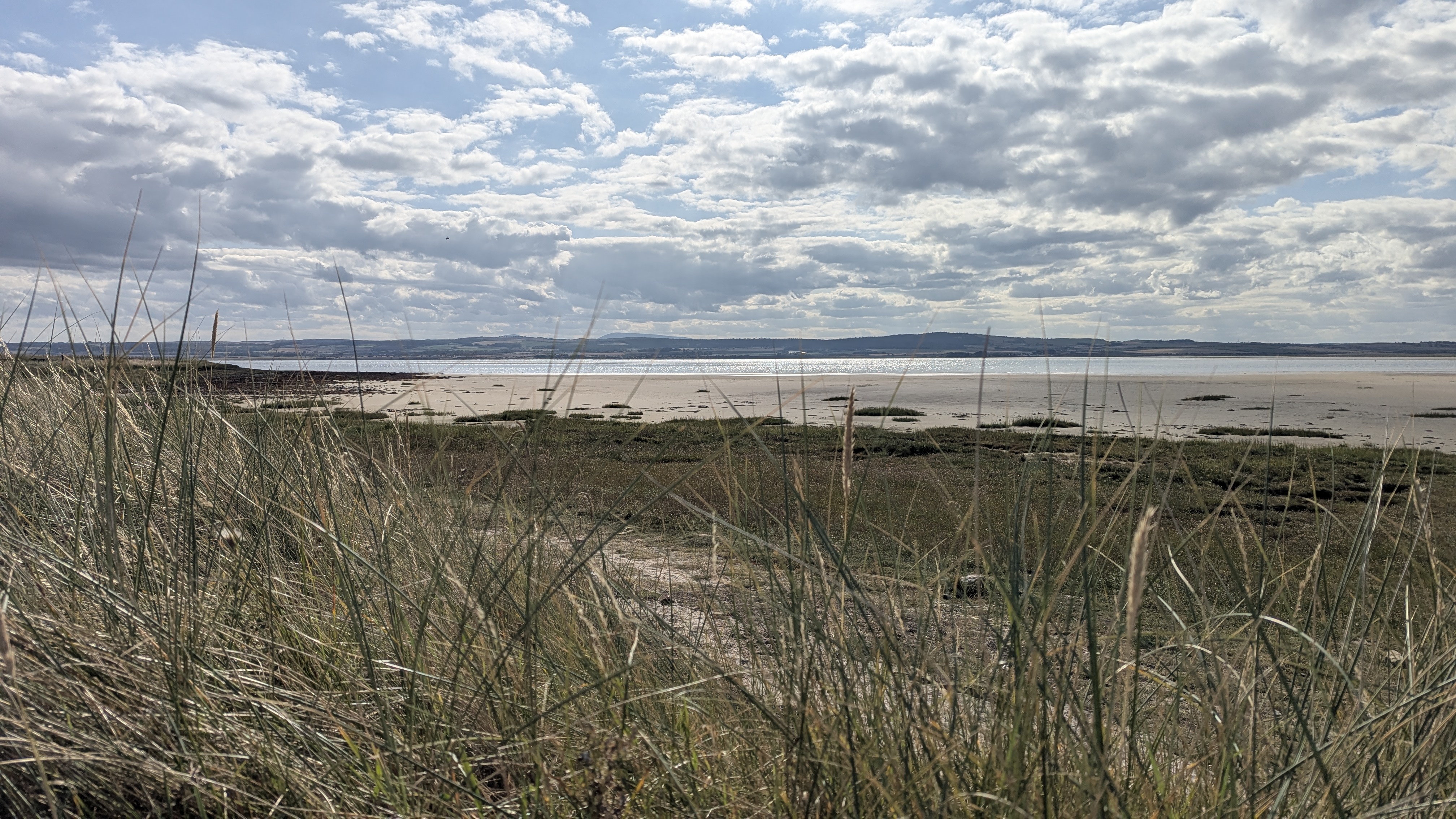
As it happened there wasn’t much chance to get stuck in the tide that day. According to the taxi driver, this was a historically low tide: the first in 20 years which hadn’t covered the road across to the island at high tide. The first part of the plgrim’s causeway was completely dry - there were enough footmarks to show the tide hadn’t been anywhere near the poles for days. However to our relief it did get wetter and wetter as we went: this is definitely a walk that you do barefoot. Mud-socks were acquired on the part where causeway goes onto a spit of land. The tidal waters gradually got deeper and deeper on the last stretch before the island: evidently we were nowhere near low tide yet. Eventually we were thigh deep and had to divert inland, away from the poles, to keep our rucksacks dry! We could hear the seals on the wind, but couldn’t quite place them. Reaching the island we had a sit down among the marron grass, and then followed the King Charles III coast path anticlockwise around the island into the village rather than schlepping up the road past the coach park.
















By the way …
The names ‘Lindisfarne’ and ‘Holy Island’ can both be used interchangeably when referring to the island, but Lindisfarne is the older name (traced well back to the Anglo-Saxon period, whereas ‘Holy Island’ has been used since the 11th century). Thus, ‘Lindisfarne’ is more properly used when referring to historical monuments such as Lindisfarne Priory, but the locals seem to prefer ‘Holy Island’ and the village is called ‘Holy Island Village’ or ‘The Village’.
First evening on Lindisfarne
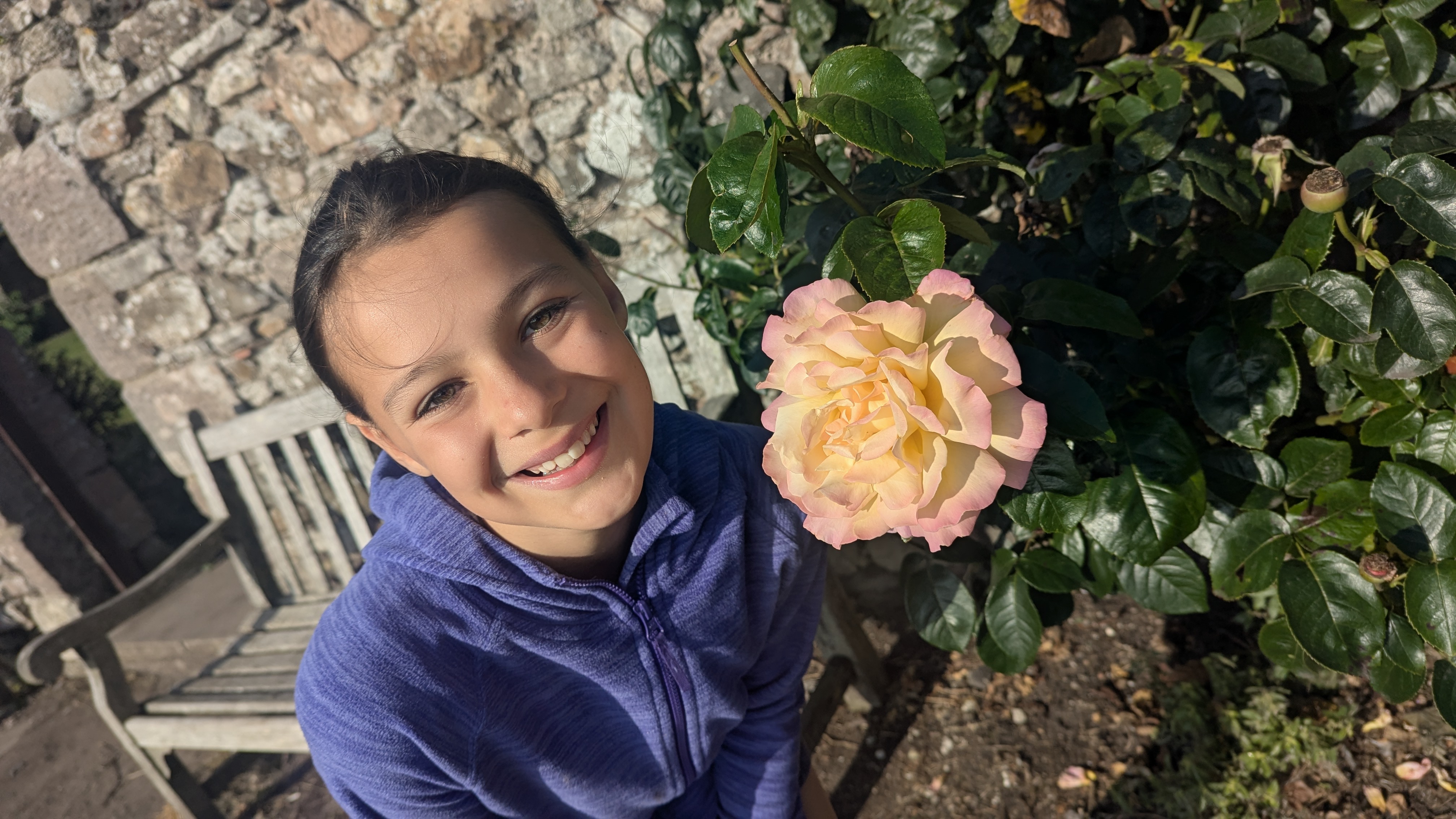
We were amazed how much better the weather is this far south! And it’s very strange to be treating Lindisfarne - one of the most northerly corners of England - as South! We had a gentle potter around the village, visiting its exquisite ‘Gospel Garden’, a community project wonderfully maintained and cared for and bedecked with flowers on this summer day. We had an ‘Upside down dinner’ (ie pudding first) with excellent gelato from the village shop; Dom’s pink lemonade sorbet was particularly outstanding.
We were staying at the Crown & Anchor (‘C&A’), a pub with rooms right next to Lindisfarne Priory and most heartily recommended as a place to stay. Dom and Rosa had their own room, and the grown-ups had a room overlooking the East end of the Priory and the Heugh. Lobster and Chips for Al dinner, and the kids were heartily fond of their burgers; it was all good enough to convince us to try more of the menu at the C&A tomorrow.




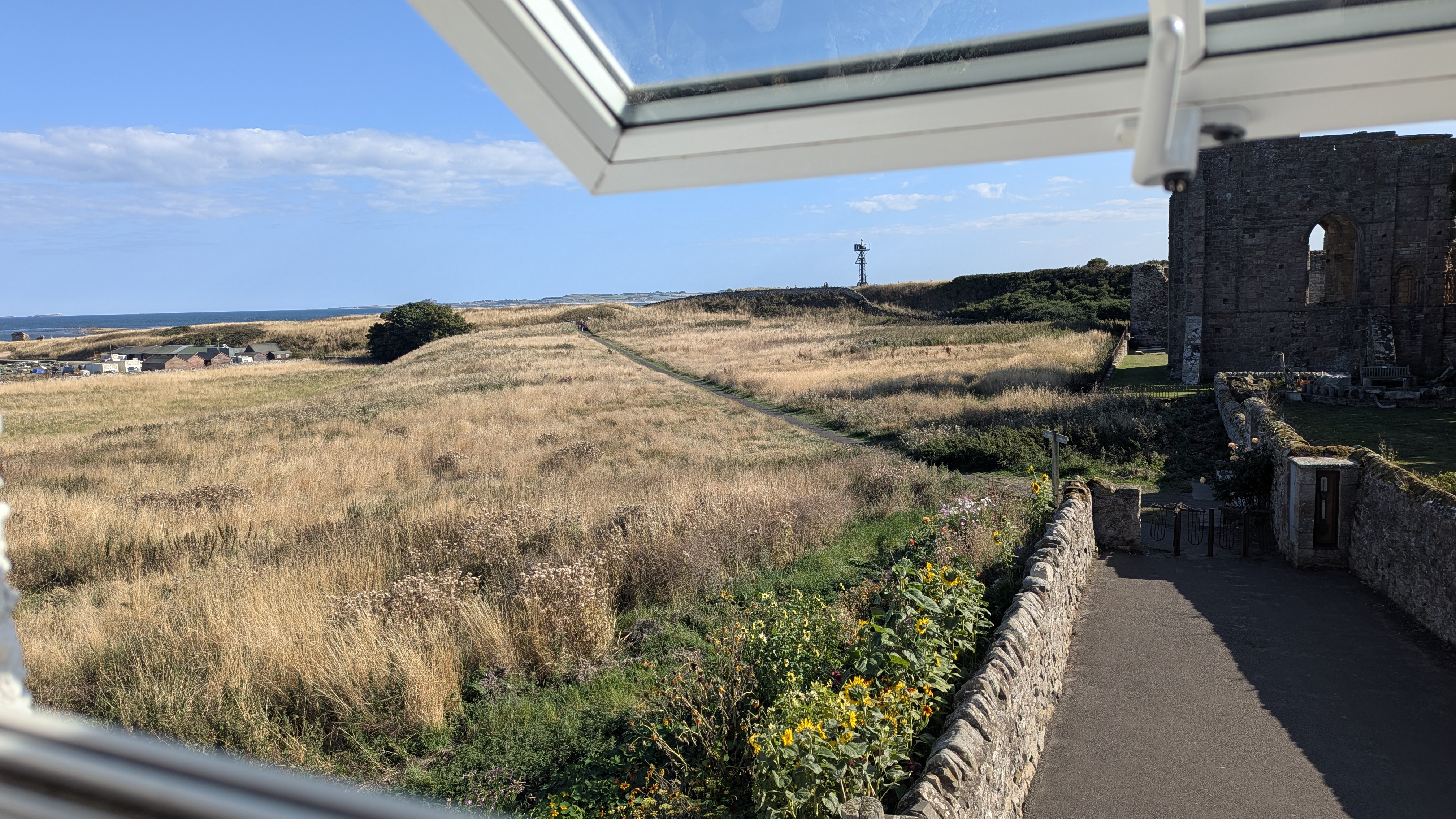
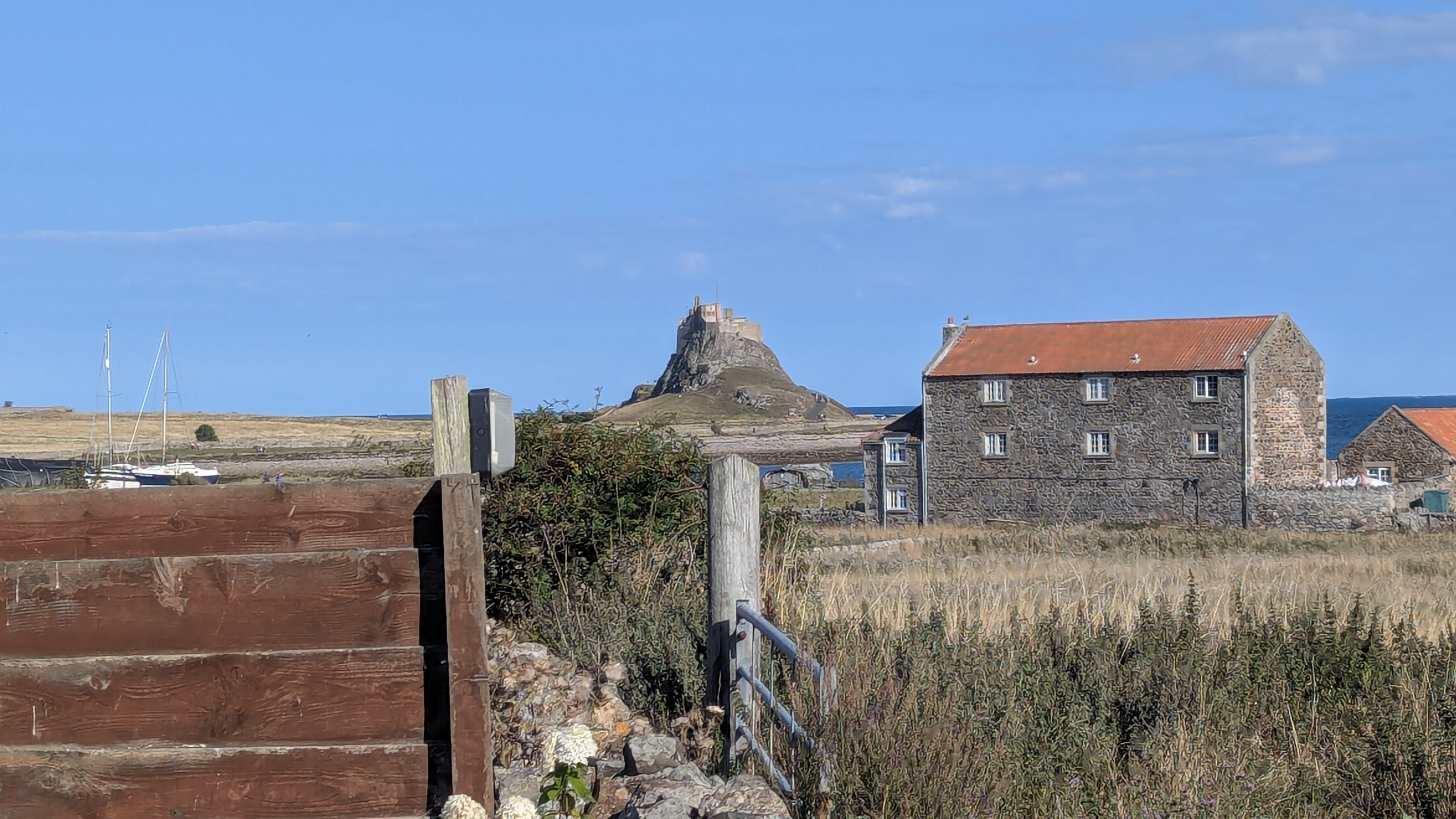

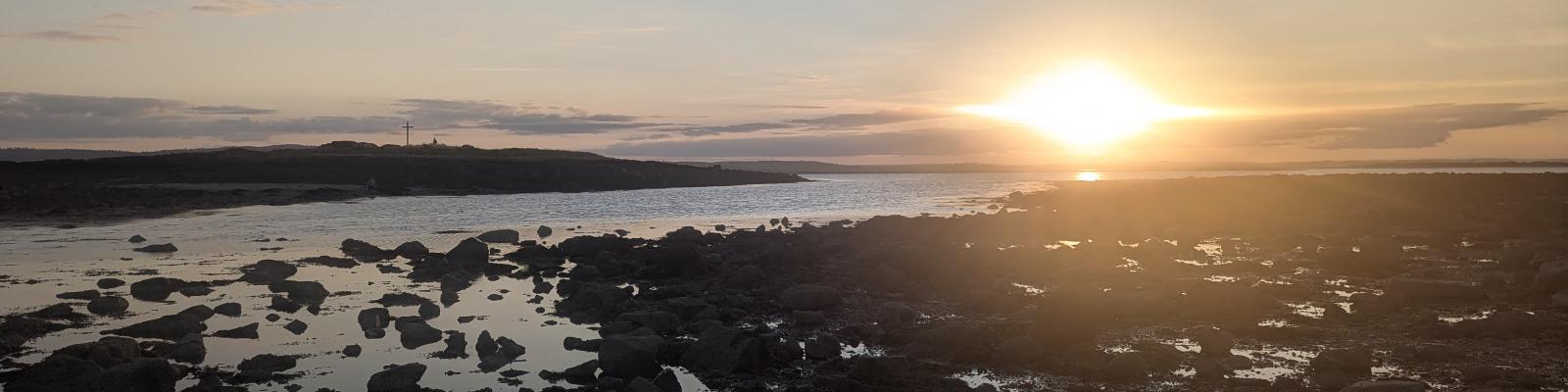
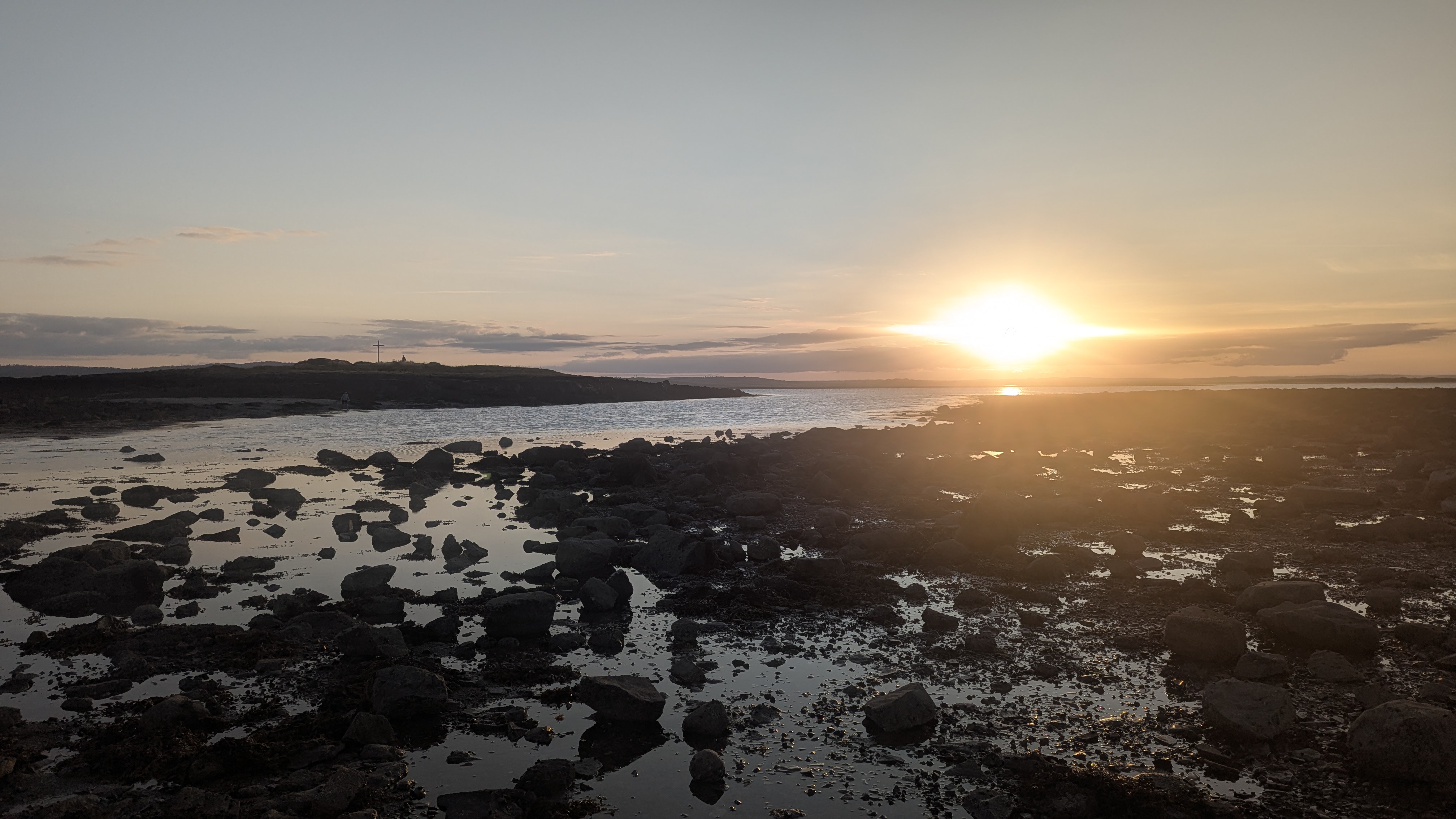
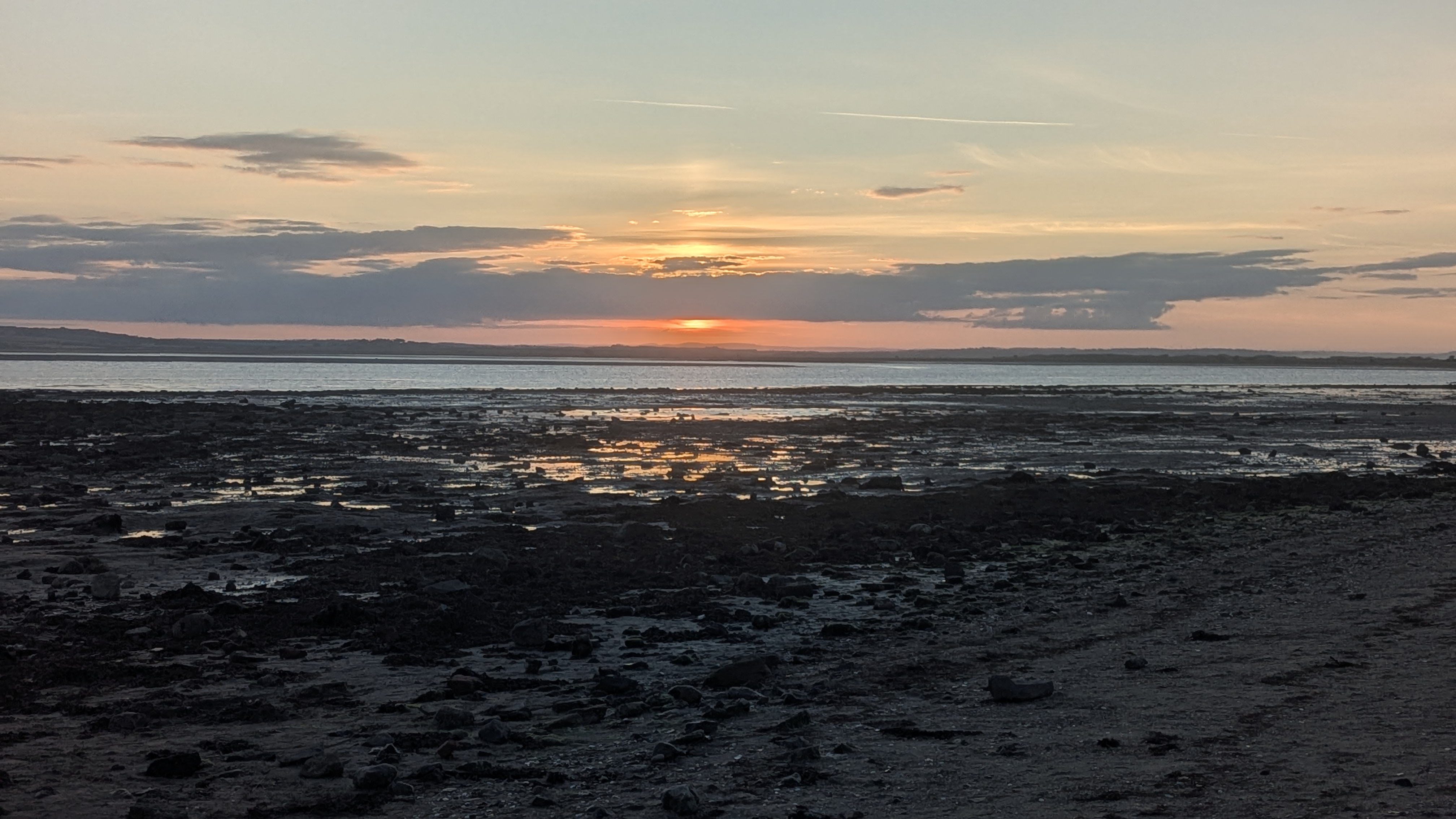
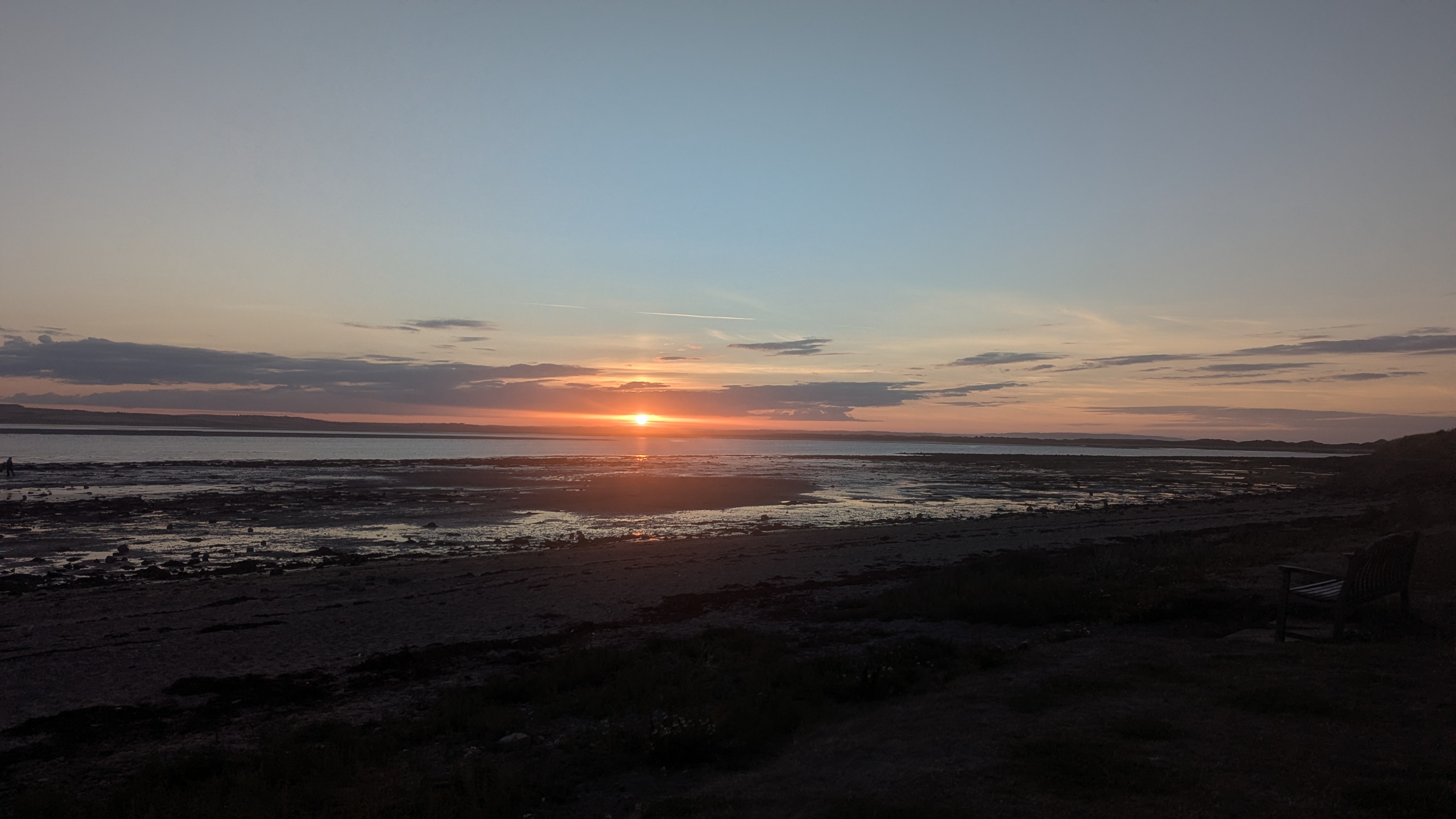
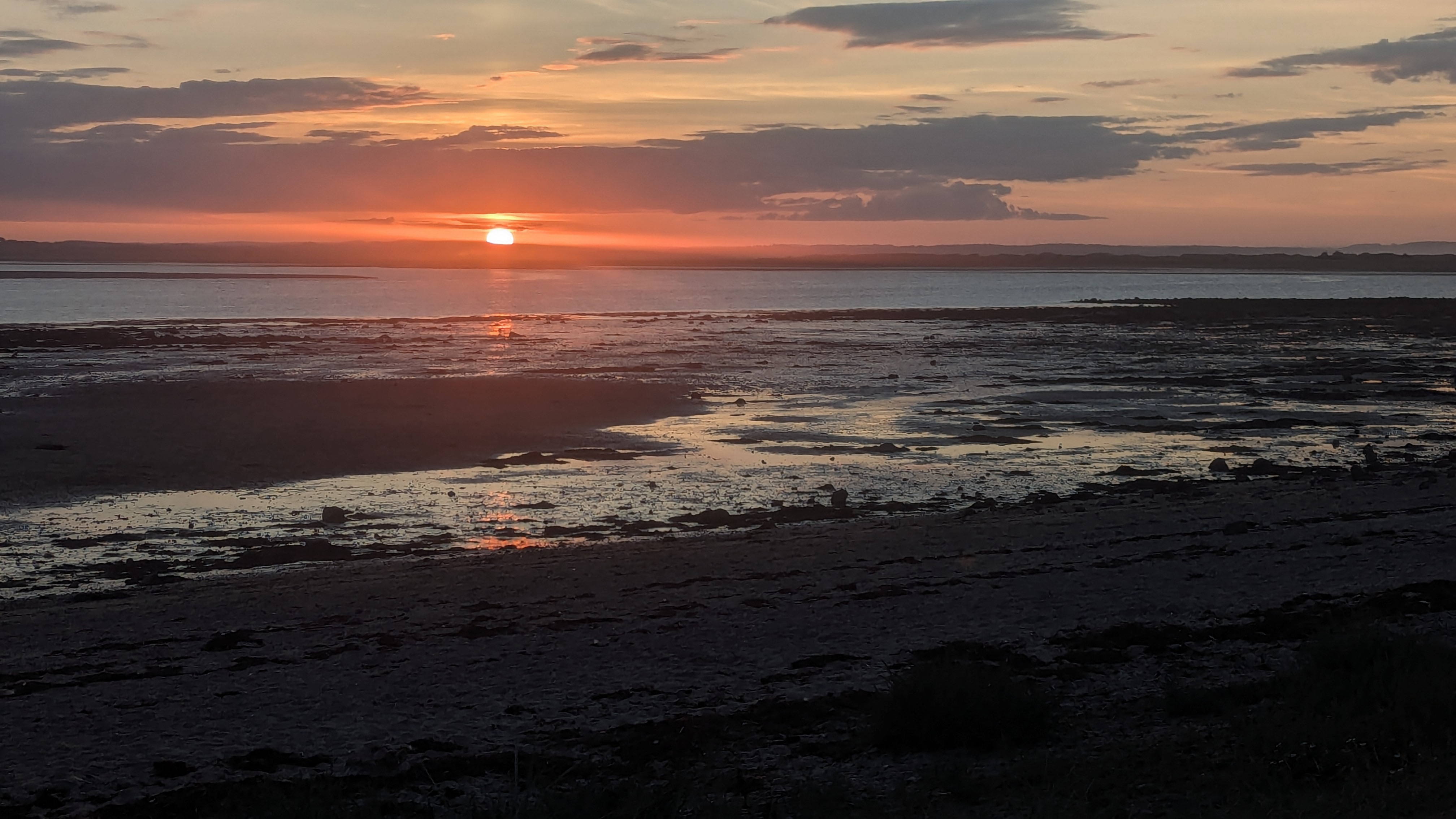
The highlight of the evening though was a sensational walk around the Heugh (the high bank of land leading west of the harbour) and the Priory ruins at sunset, basking in the balmy evening sunshine - absolutely gorgeous. Al denies that his crossing out to the tiny St Cuthbert’s Island at the beginning of a rising tide, to get sunset photos of the big cross on the top of the island, was ill-advised. Rachel and a stranger claiming qualifications by dint of being a local islander begged to differ. Fortunately Al was brought safely back to Lindisfarne.
We finished the evening once the kids were in bed by joining in closing time at the bar with all the staff from all the pubs in Holy Island; evidently this is where they all come to debrief the day, and very convivial it all was.





Day 16, Monday 24 August: Full day on Lindisfarne
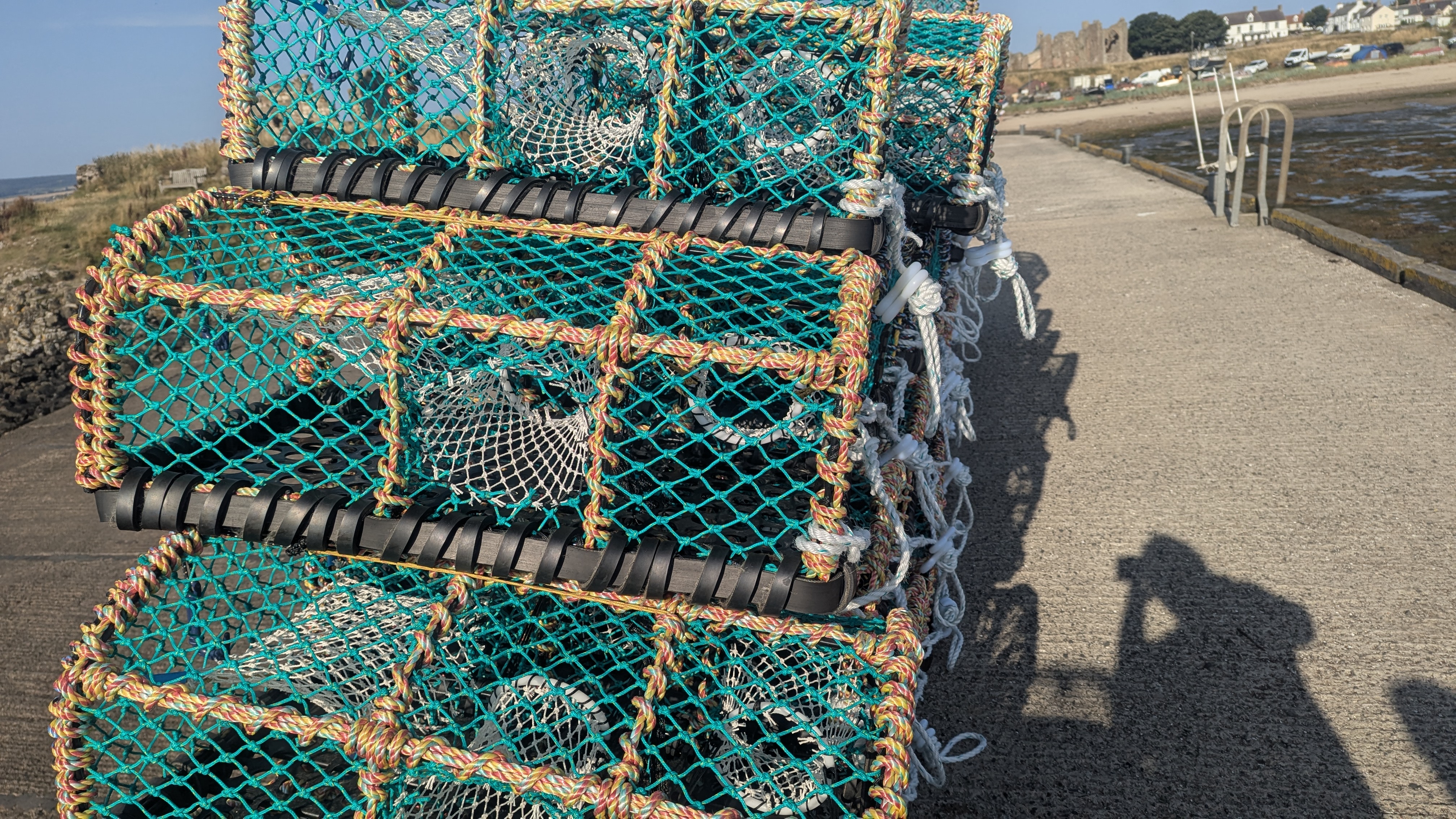
Following a sensational (Craster Kipper!) breakfast at the C&A, we started with a peaceful early-morning wander around Lindisfarne’s harbour while the kids built a sand mound. We had the whole place to ourselves at first, but then locals and fishermen started to get things ready. There was an impressive quantity of brand-new lobster pots, so hopefully the fishing trade on Lindisfarne is not quite dead yet? We spotted a deer for a fleeting moment in the long grass below the Heugh, but it was gone long before a camera could be fumbled for! Clambering around on the Heugh we also managed to triangulate the exact spot where the painting in our living room in Hertford was painted from, as indicated by Dom!
The plan for the day was to visit Lindisfarne Castle in the morning before it got too busy (none of us had been inside before, and it had been closed for restoration last time we were here in 2017). Then Al would visit the priory (Rachel felt like she’d seen plenty of it at sunset the previous day) while the others went to get more ice creams. Then we’d explore the North coast of Lindisfarne and its beaches for our first time.




The Castle
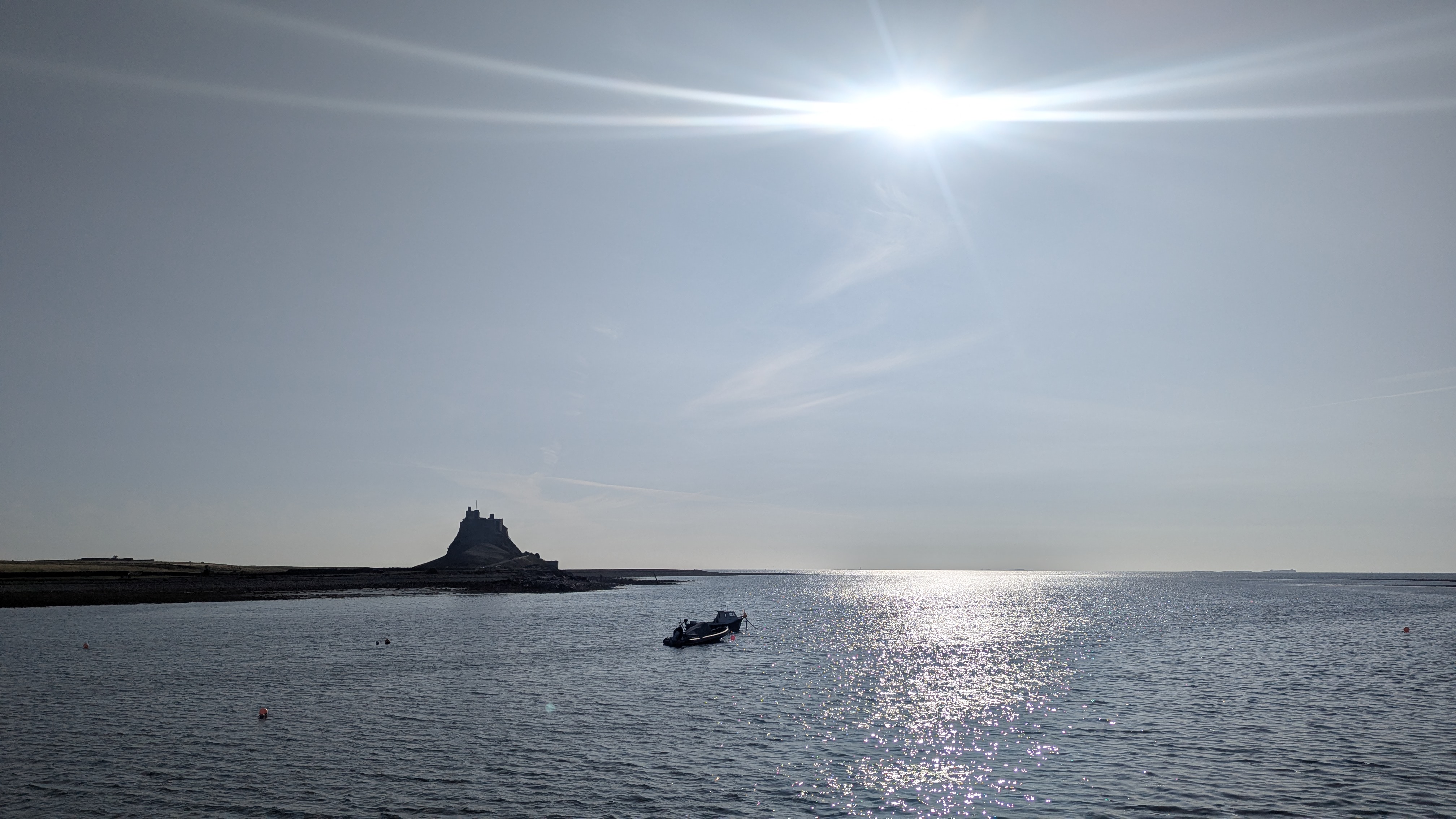
The arrival of a phalanx of tourists streaming along the harbour path at 9.44am indicated it was time to get out to the castle quick! Lindisfarne Castle looks iconic and mystical, but it’s not medieval; it only really took its current form in the 16th century, guarding against Scottish marauders; this soon became a non-issue as James I unified Scotland and England in 1603. It’s been through a variety of uses since then. But the monks who sang the monastic offices in the priory would have looked across the harbour not at a castle but at a rocky outcrop and nothing more. In fact the timing of Henry VIIIs dissolution of the monasteries (Lindisfarne Priory was abandoned in 1537) was very convenient for the Elizabethen castle builders, for whom the priory was an extremely convenient source of quarried stone …
The National Trust have done an excellent job with their restoration and presentation of Lindisfarne castle. Instead of filling it with worthy but meaningless antique furniture and priceless but obscure objets, it’s full of appropriate but not precious second-hand stuff representing how the rooms would have been used in the castle’s 1918 holiday-home heyday when Edward Hudson (publisher for Country Life magazine) entertained his posh friends there; guests included Edwin ‘Ned’ Lutyens, the architect of the transformation and restoration of the Castle for Hudson’s comfort and vision, Siegfried Sassoon, J.M. Barrie, Gertrude Jekyll and, perhaps most importantly, the Portuguese cellist Guilhermina Suggia, with whom he became romantically involved..
The result is you can sit down on the sofas, pick up the knives and forks on the table, read the books and notebooks on the shelves (they may contain notes specially put there for you to read …). The staff are brilliant and full of tall tales. You can follow your own nose around the castle rather than having to traipse around following signposts. There are almost no signs saying ‘don’t touch’ and ‘No etnry’ etc.
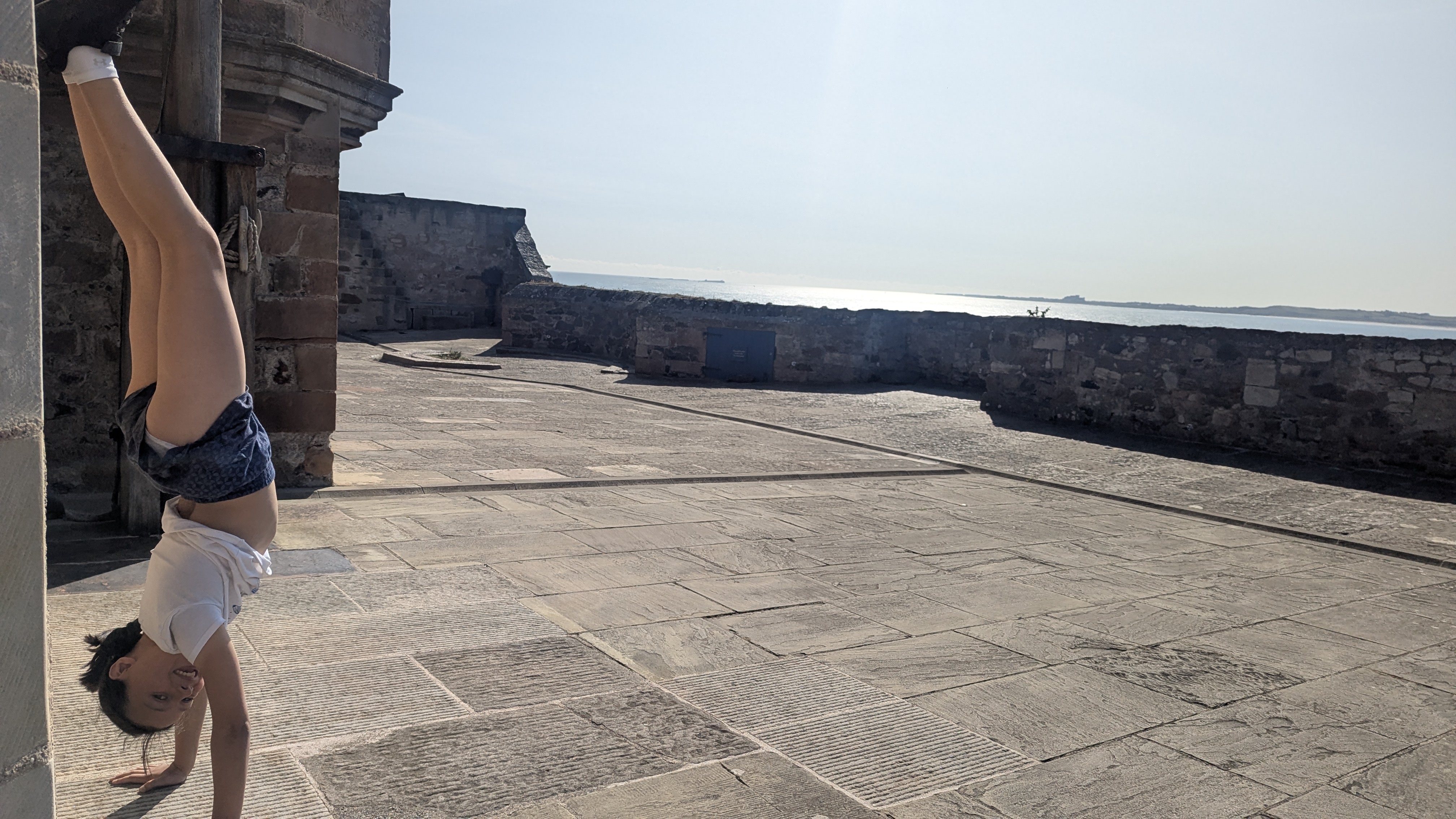
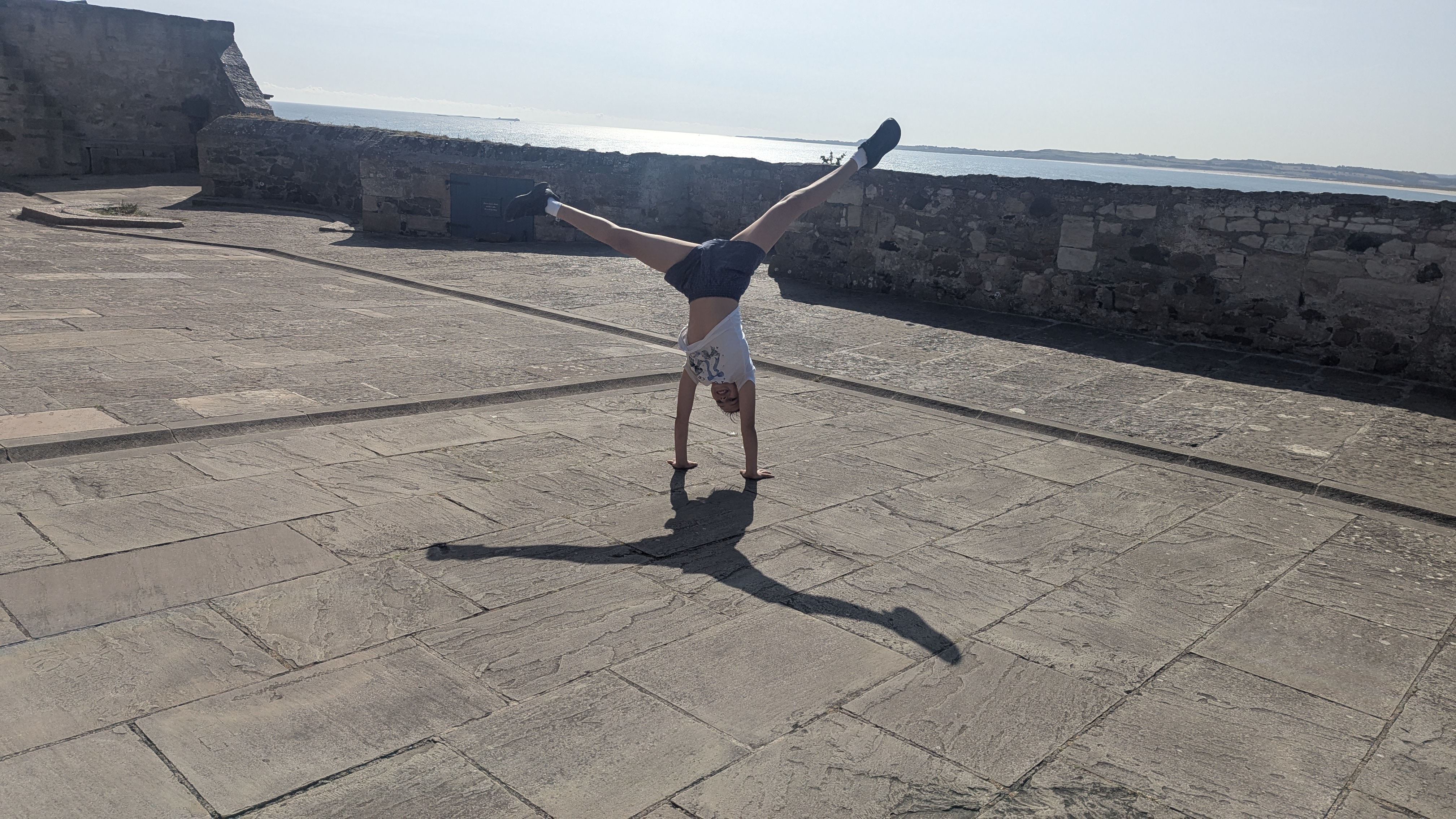
For all its bravado Lindisfarne Castle’s military credentials are really not stellar. One guide told me the Victorian guns were essentially useless. The castle was captured and then recaptured so easily in the English Civil War that its usefulness was immediately questioned. Rosa thought that the Upper Battery was best used for cartwheels. Visit it for its views and its interiors, and imagine there’s Puccini (or perhaps Elgar) on the Gramophone and a coupe of champagne in one hand.






The Priory
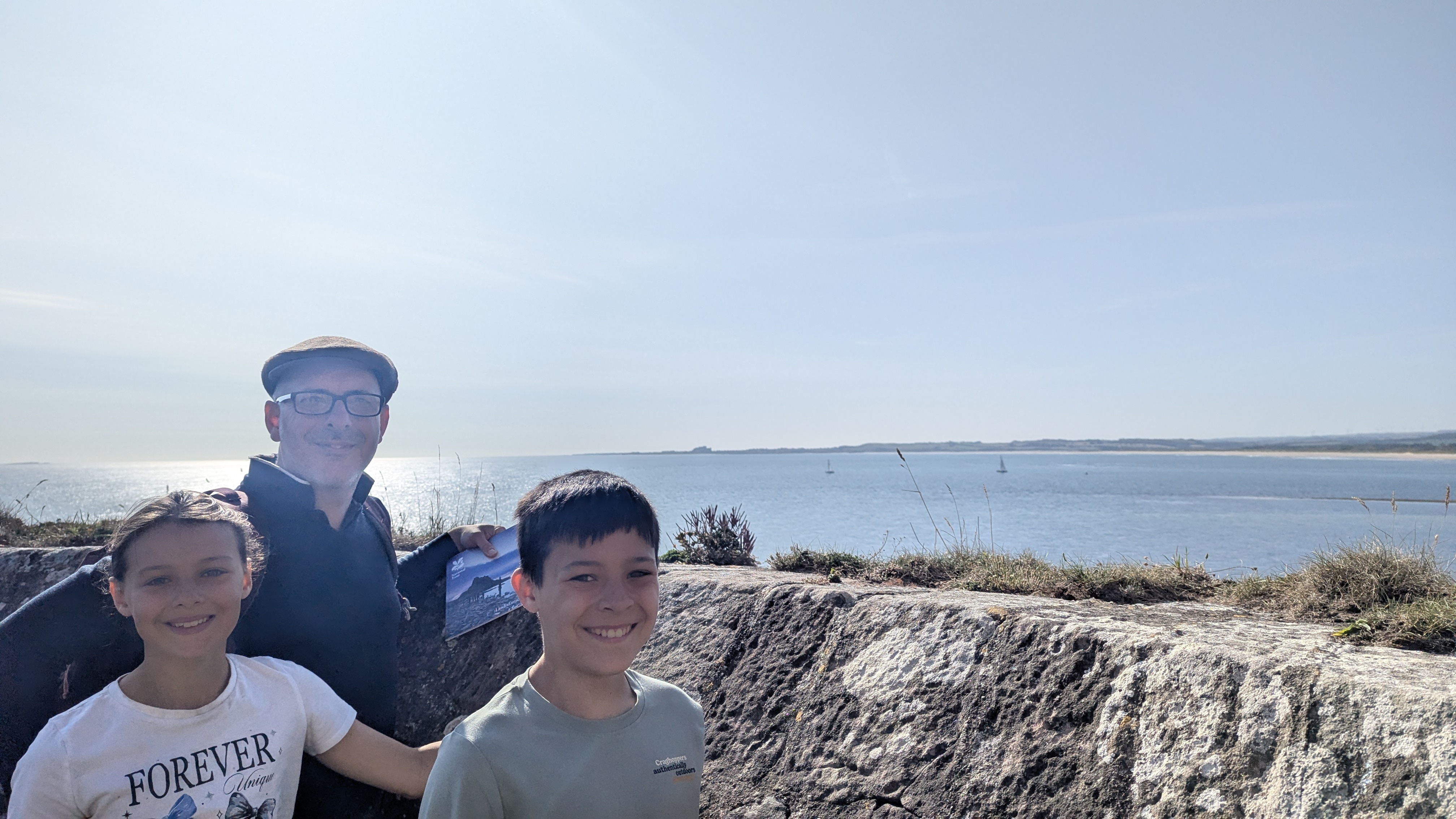
My wander around Lindisfarne Priory was atmospheric, and the ochre-coloured ruins looked very striking against the blue sky. I’ve been there many times before so didn’t notice much new (I mean, new to me of course!), and had the briefest of whizzes around the museum to see if there was anything new in there (nope).
The architectural family relationship both with St Magnus in Kirkwall and with Durham Cathedral is extremely striking. Very few minor monastic houses would have been given stone vaulted ceilings throughout in this period (actually those at St Magnus might be later additions?). Having been built like a fortress, the church clearly wasn’t modernised much after its intial C12 build (except for the enlarged Chancel): there were only ever a few monks there and they were only ever there for a temporary spell. In contrast to its 7th Century glory days under St Cuthbert, Lindisfarne’s late-medieval reincarnation was a bit of a punishment-posting for troublesome monks from Durham who needed a few months somewhere cold, isolated and dangerous to think about their behaviour. The main modifications were the additions of battlements above the main roof-line to help defend the monastery from warlike Scots; the guidebook’s reconstructions actually show this looking rather inelegant to my eye - needs must I suppose, and it wouldn’t have spoiled the interior.


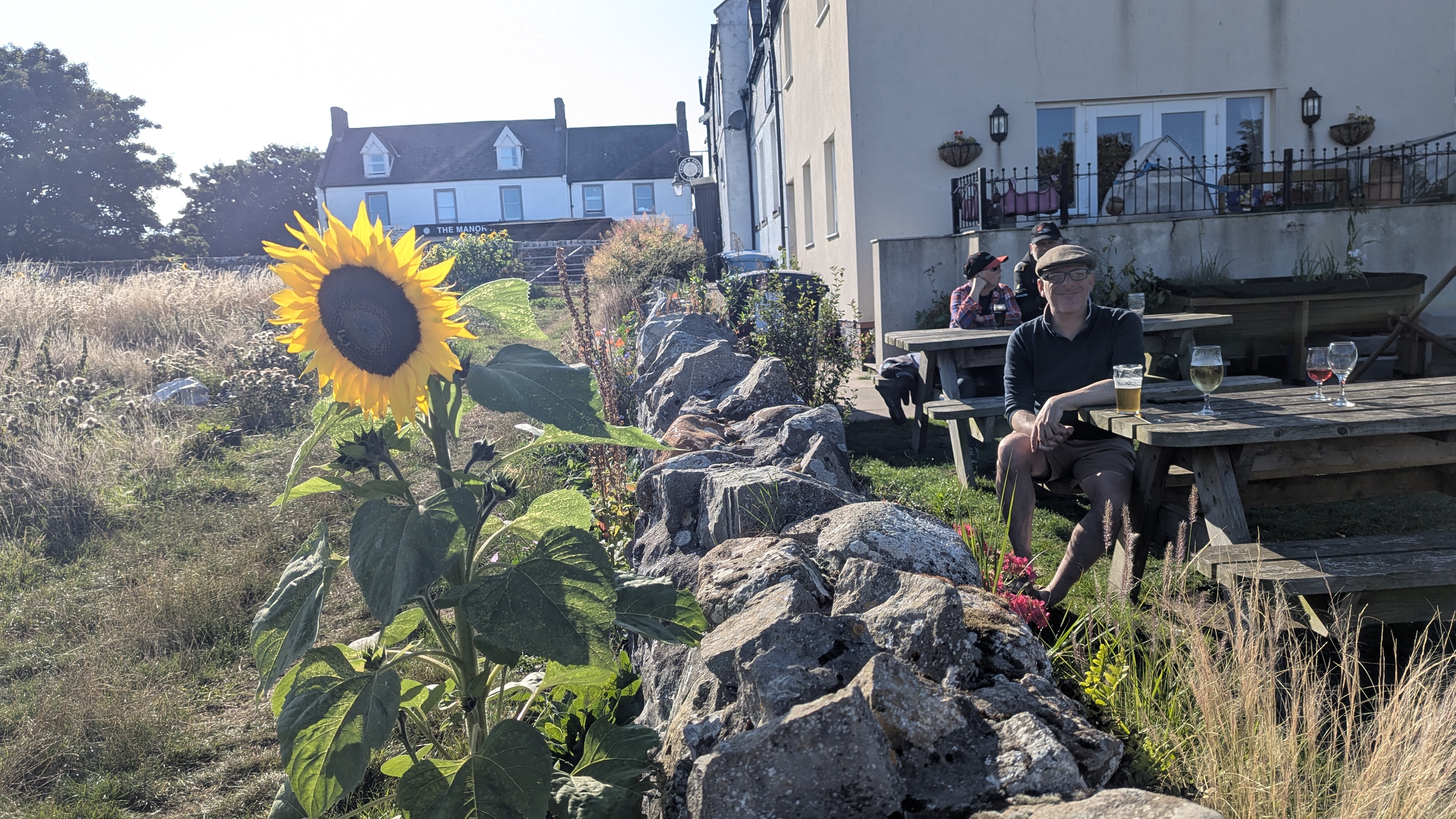
The last photo is a statue of St Aidan (the statue is actually a bit in need of TLC). He looks like he’s also enjoying a Lindisfarne ice cream (and I’m pleased that I managed to make the C&A photo-bomb him). Aidan was the founder of Lindisfarne Priory, but it is St Cuthbert who is the name to be reckoned with when you come to Lindisfarne.
What’s the big deal about St Cuthbert?
Cuthbert is a bigger deal than most Brits realise. First, Christianity (and therefore literacy) was still young in northern Britain in Cuthbert’s lifetime (c. 635–687) and he was a lynchpin in its establishment, ultimately becoming one of the most influential religious figures in early medieval Europe. He was Prior and Bishop of Lindisfarne in the days when it was one of perhaps the four or five most important churches in the North of the British Isles. He was beloved by both poor and rich, and his reputation for holiness and healing spread far and wide in his lifetime. In a violent, war-torn age (Cuthbert was born about three years after the death of Muhammed and his life spanned the rise of the Umayyad Caliphate, the Arab conquests of Syria, Palestine and Egypt, and the beginning of the decline of the Merovingian dynasty in France, with Charles Martel being born five years after Cuthbert’s death), Cuthbert showed the power that asceticism and holiness could still wield.
And then, when his body was exhumed eleven years after his death it was found miraculously incorrupt. Stories of miracles started to multiply, and pilgrims flocked to Lindisfarne from Britain and beyond, making the monastery spectacularly rich - the greatest site of pilgrimage in Britain before St Thomas Becket’s shrine was established in the 1170s.
When Viking attacks forced the monks to abandon Lindisfarne in 875, they carried Cuthbert’s body with them for more than a century. Now long-dead, Cuthbert wielded political power through his relics. You think I’m exaggerating? Well, around 883 the Scandinavian ruler Guthred was made king of Northumbria near York through the intervention of Cuthbert’s abbot, Eadred. In gratitude, Guthred granted Cuthbert’s monastic community substantial lands between the Tyne and Wear (including Chester-le-Street, where the monks would make their heaadquarters for decades). Guthred and his army swore an oath of peace and fidelity over the saint’s remains. But most remarkably (according to the Historia de Sancto Cuthberto) the lands were not technically granted to the monks at all: King Guthred gave them to Cuthbert himself: the saint was regarded as a perpetual, supernatural landlord, with his community administering his estates on his behalf. Thus, one of the principal land-owners in 9th century Britain was a dead body.
Cuthbert was subsequently adopted by the Anglo-Saxon kings, including Alfred and Athelstan, as their protector. Some of the precious vestments found in Cuthbert’s coffin when it was opened in 1827 were gifts from Athelstan from when he visited the Monks at Chester-le-street in 934, on his way to slaughter some Scots. Thus, if you accept the thesis that Athelstan was the founder of a united England, then you can argue that Cuthbert has a much better claim to be England’s Patron Saint than St George, who obviously never set foot in Britain, and who might not even have existed.
The Lindisfarne community finally settled at Durham in 995, where an awesome Cathedral was built around Cuthbert’s shrine (replaced after the Norman Conquest with the even more awesome one there today). His remains survived the protestnat Reformation - even Henry VIII’s men seemed to be afraid of them! - and are still buried there today. Cuthbert, Magnus and Edward the Confessor are the only British pre-reformation saints whose remains weren’t chucked on a fire or in a river by the protestants (almost! - there’s what’s probably the remains of a St Wite in a country church in Dorset, and an assorted bundle of Royal Anglo-Saxon bones in Winchester Cathedral which may or may not have been venerated as saintly). Even among that rare company Cuthbert is a special case: Edward was likely left alone more because he was a King than a saint; St Wite was pretty much forgotten; it’s not very clear how St Magnus’s remains survived until 1919 (lost? forgotten? hidden?), but whatever happened in 16th century Kirkwall the protestant reformers never got hold of them. Cuthbert, though, was actaually dug up by Henry’s commissioners and then, amazingly, they reburied him in the Cathedral. So Cuthbert’s tomb beneath the (modern) shrine at Durham is one of the last physical objects in existence which can directly link us to the beginnings of the established Christian civilisation in Britain.
The Beach
Two boats from Seahouses disgorged another 400 folk in brightly-coloured sportswear into Holy Island village over lunchtime. We were lucky to find a table for lunch (in the Ship Inn) - the C&A told us later that they’d been expecting 60 covers and actually did 140!
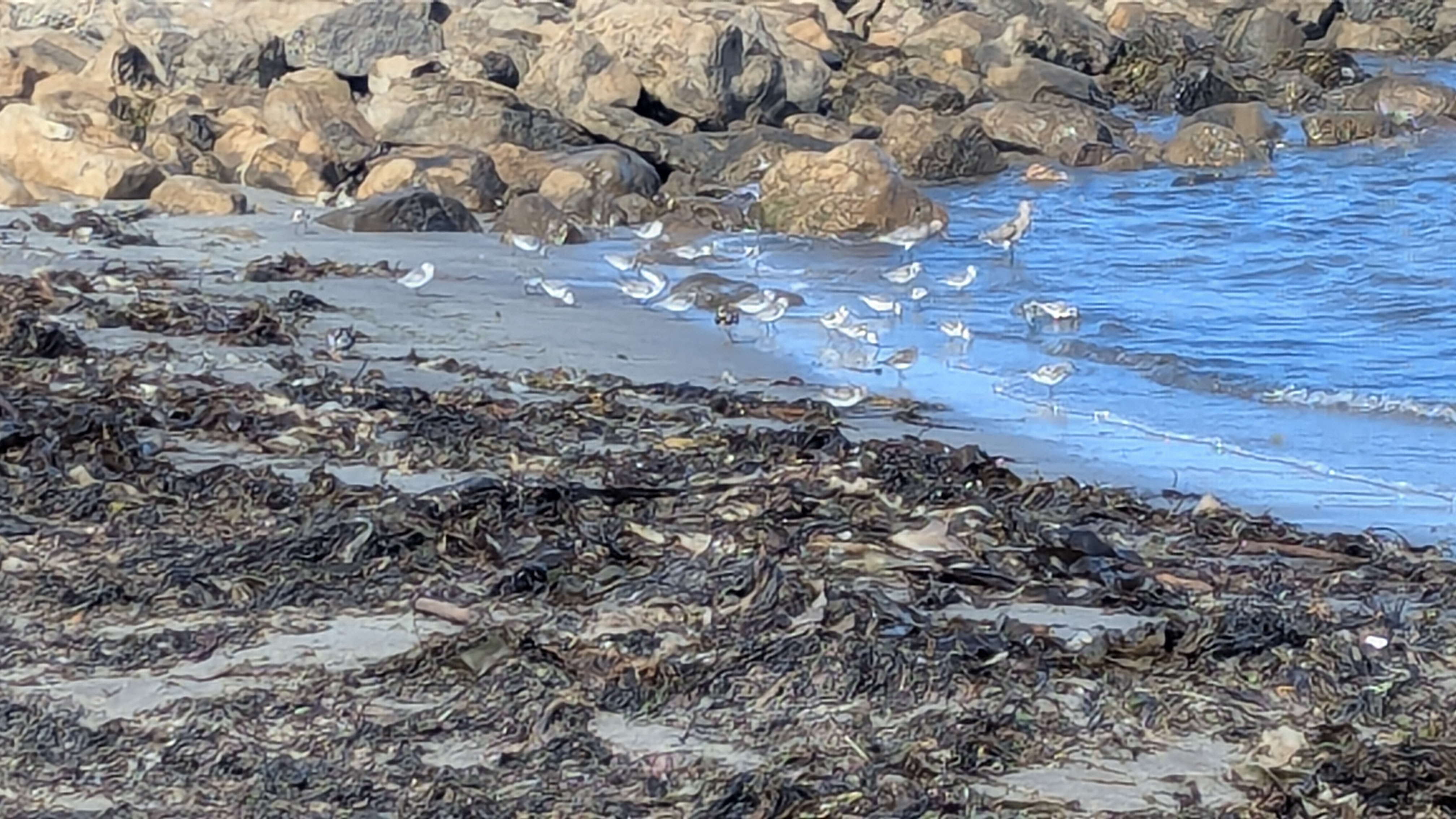
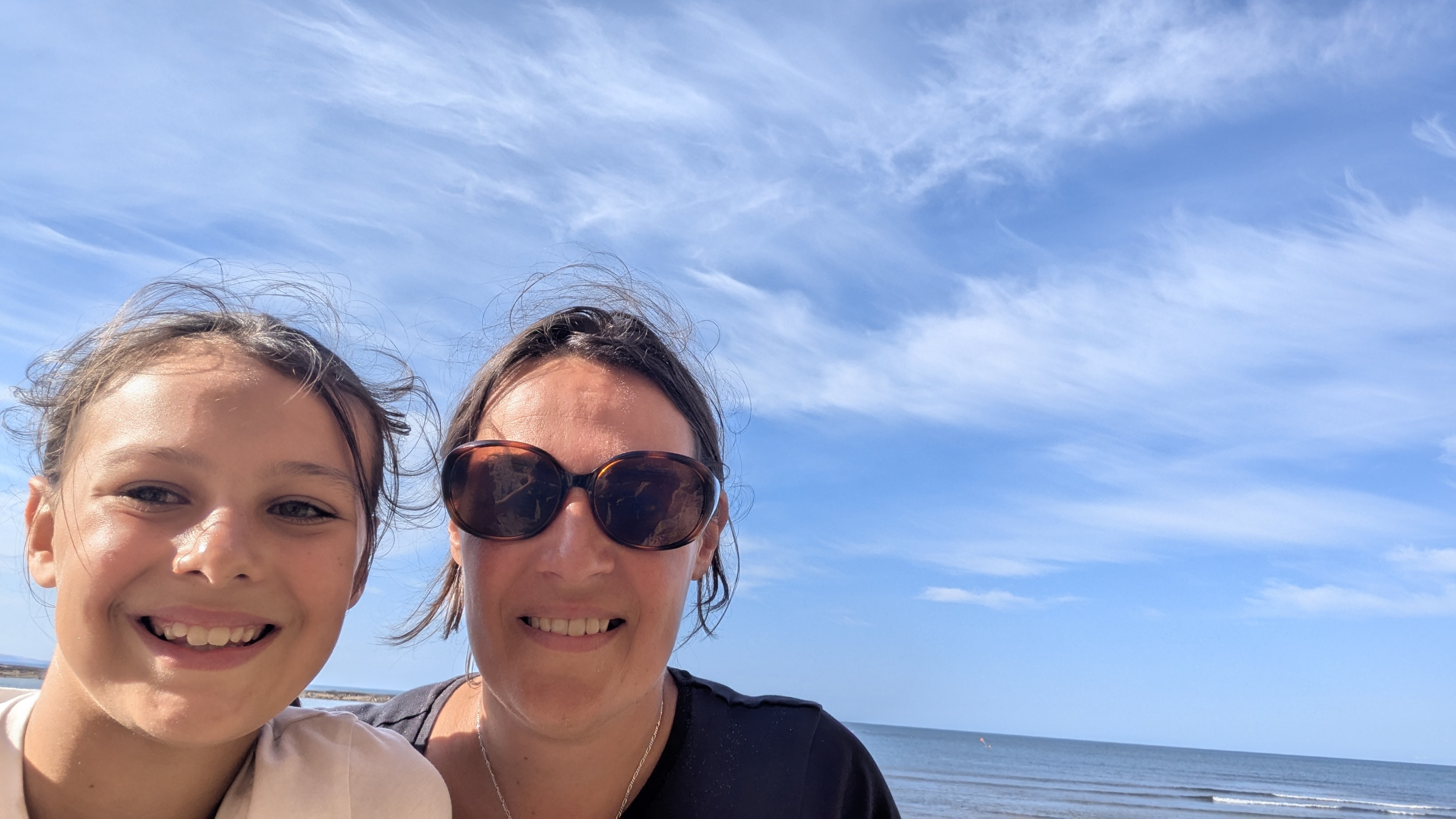
The time had clearly come to get away from the crowds and get a nice walk in, and so we took the northbound path from the Village up through the agricultural centre of the island, over the dunes and down to Caves Haven beach. The contrast between the busyness in the village with now having a whole sandy beach to ourselves, was almost a shock. The only sound was the sea and the birds - Dunlins scurrying along the water line, Oyster Catchers and a diving Gannet. We clambered around rocks and caves; Dom and Rosa dug a big pit with a grand entrance supplied by Mummy. The only snag was that the sea bed was too rocky for more than a small paddle without water shoes. It was so peaceful, warm and wonderfully sheltered from the wind - Al denies falling asleep on the sand. All that remained was the beautiful walk back over the dunes and through the hedgerows to the C&A. As we passed the car park the twice-weekly bus to the mainland was being mobbed by a queue of people that seemed to go on for ever - surely not everyone made it back to the mainland??






Final evening of the trip
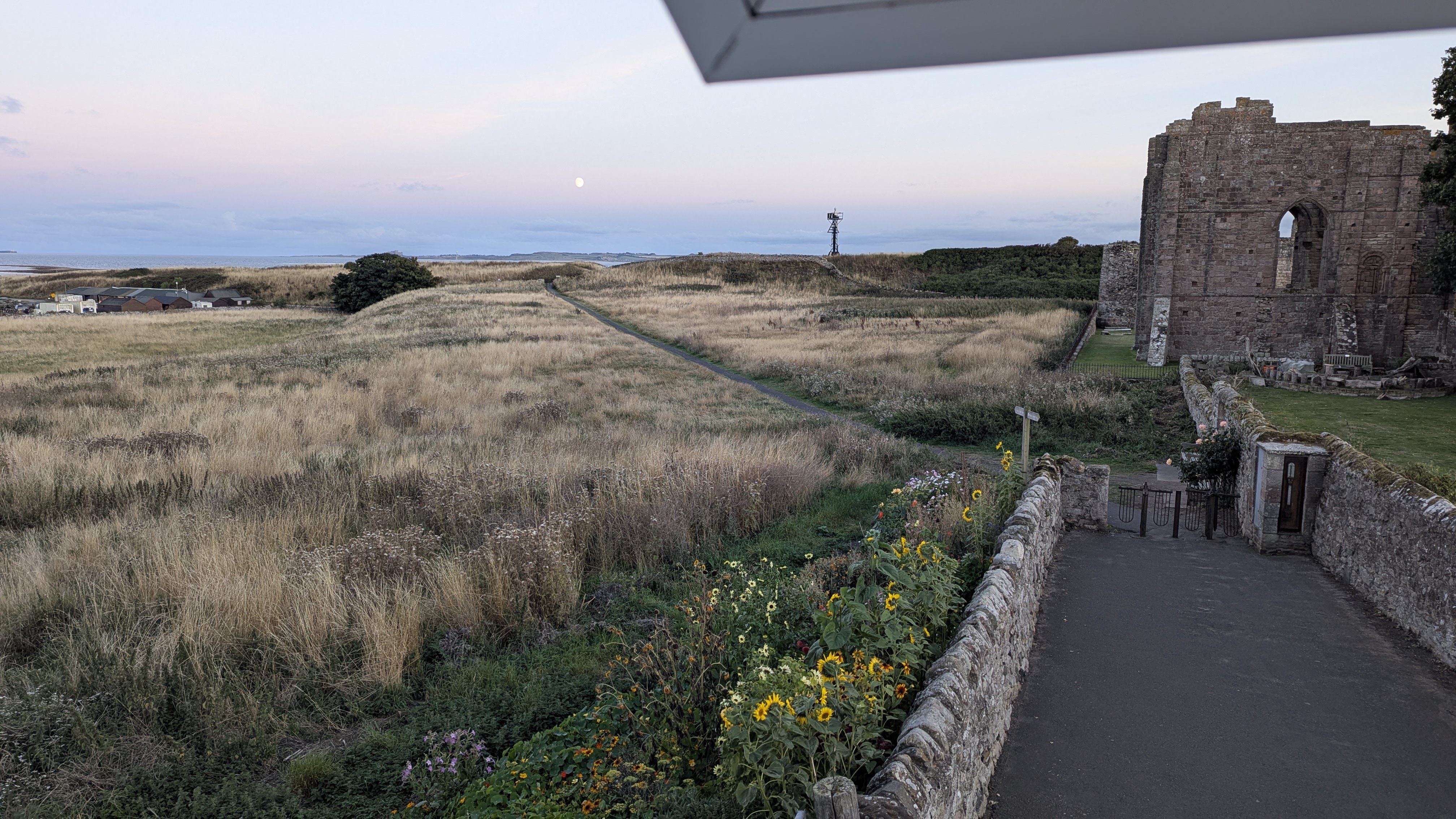
The C&A delivered beautifully on its promise to give us a fantastic dinner (Hispi roast cabbage with miso and ginger glaze, tahini and crisped onions; also lovely cod with a seaweed crisp, bok choi, capers and roasted new potatoes). We enjoyed once again the evening views across to the priory, played our railway board game with Dom, and then had a peaceful early bedtime!


Day 17, Tuesday 25 August: Travel Back down to Hertford
Finally time to head home now! Over breakfast (those kippers really are superb!) we had a good natter with Keith who served us, and who used to own the Crown and Anchor; he had to move away to the mainland when his daughter was nine, to support her schooling and social life. The compromises that islanders have to make will always baffle mainlanders I guess, and it’s always sobering (no pun intended) to be reminded what a risky and full-on job it is to be a pub landlord: Britain’s pubs (and most especially England’s) are the finest on Earth, and we must support them or lose them: nowhere else can match them. Once again, Premier Taxis were seamless and friendly, meeting us outside the C&A, reuniting us with our luggage, refusing a tip (though a 5* google review was humbly requested and gladly provided) and setting us down in plenty of time for our train. It turns out the driver lives around the corner from Keith in Berwick…
The rail journey south from Berwick is mostly not very scenic (the York Plain, South Yorkshire, the East Midlands etc) but with a few moments of spectacle. My attempts at snapping Durham Cathedral are below but I’m not pretending they were very successful. Train photography is really not easy; things go by so quickly you don’t get chance to line up your shot properly, and glass reflections invariably get in the way. I gave up trying to snap York Minster over the city rooftops.
Hmmmmm we really should have stopped for lunch and paid a visit to St Cuthbert in Durham Cathedral. But we had run out of time; it will have to wait for another trip.
The group of ladies across the aisle from our table on the train shared our predilection for prosecco (in our case the latter cheekily nabbed from the shop on Newcastle station) and were considerably better dressed than us. Sadly they were rather less well able to keep the liquid in its intended receptacles. We watched the landscape get browner and drier as southern England approached; clearly we were re-entering the suffocating embrace of the summer heatwave. At the same time the landscape was much more tree-covered than we’d been accustomed to over the last couple of weeks, and anything with longer roots than grass was managing just fine. The landscape would return (at least superficially) to normal over the next couple of weeks.
Having changed trains successfully at Stevenage we realised that we had made our final connection and that therefore:
It’s official: No Kirk’s Kalamities On Our 2026 Adventure!!
No missed trains, no being stranded on uninhabited islands, no being swept up by the tide, no cancellations, no detours, no forgotten cuddlies. It’s a record. Good to be home.


Map
(This map only includes those those photos which have GPS information.)